Choosing among the 7 Best Knee Replacement Systems for Global Buyers requires more than comparing brand names. Knee replacement systems differ in implant geometry, fixation methods, bearing materials, surgical instruments, and sizing options. These details can influence stability, movement, wear, and long-term follow-up.
The word “best” needs careful interpretation. A system suited to an active patient may not fit an older patient with severe bone loss. Surgeon experience also matters. So does hospital equipment. A familiar implant, supported by reliable training and documentation, may be safer than a technically impressive option with limited local support. This is not always obvious.
This guide examines seven widely discussed systems through practical and evidence-based considerations. It considers clinical history, design features, regulatory status, manufacturer reliability, and availability across international markets. Buyers should review published clinical data, product certifications, sterilization requirements, and warranty terms before making decisions. Local surgeons and qualified procurement teams must remain involved.
Small details matter. A missing instrument tray can delay surgery. Inconsistent sizing can complicate inventory planning. After-sales service may matter as much as the implant itself. No ranking can replace patient-specific assessment. That limitation deserves attention.
The discussion also recognizes regional differences in healthcare standards, reimbursement, training, and distribution networks. Some systems have extensive long-term evidence. Others may offer promising designs but require more independent research. Global buyers should ask difficult questions, verify every specification, and avoid treating marketing language as clinical proof. Reliable decisions begin with evidence, transparent communication, and realistic expectations.
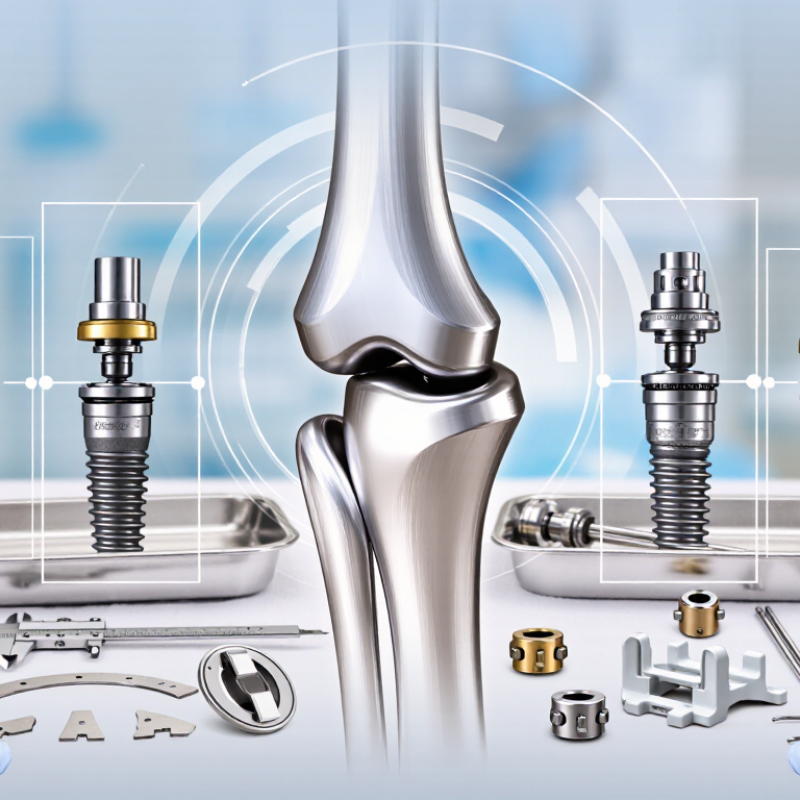
A knee replacement system is a coordinated set of implants that recreates the knee’s main moving surfaces. It usually includes a femoral component, a tibial baseplate, and a polyethylene bearing. Some systems also resurface the kneecap. Together, these parts reduce painful bone-on-bone contact and support controlled movement.
The femoral component covers the lower end of the thigh bone. The tibial component supports the upper shin. Between them, the bearing acts like a smooth cushion. During bending, the curved femoral surface rolls and slides across it. Different systems preserve, substitute, or constrain knee ligaments. Common options include cruciate-retaining, posterior-stabilized, fixed-bearing, mobile-bearing, hinged, constrained, and partial-knee designs. Each suits different anatomy and ligament conditions.
In practice, surgeons assess X-rays, walking patterns, muscle strength, and daily demands before choosing a system. Alignment guides and trial components help them test balance during surgery. Cemented fixation may provide immediate stability, while cementless surfaces rely on bone growth over time. Surgical skill matters as much as implant design. This point is easy to underestimate.
Global buyers should review material specifications, size ranges, sterilization records, clinical evidence, and local regulatory clearance. Packaging must protect components from moisture and damage. Training and instrument availability also affect real-world results. A theoretically advanced system can perform poorly when sizing is limited or surgical support is weak. No design is perfect. Patient selection, rehabilitation, and long-term monitoring still shape the outcome.
When global buyers compare the seven best knee replacement systems, they should assess evidence before catalog claims. WHO reported that 528 million people lived with osteoarthritis in 2019, creating strong demand for durable, adaptable solutions. Yet demand alone proves nothing.
Use seven practical filters: clinical survivorship, fixation method, implant geometry, material performance, instrumentation, surgeon training, and regional support. The American Joint Replacement Registry’s 2024 Annual Report includes data from more than three million hip and knee procedures. Buyers should ask whether a system has comparable registry evidence, not only laboratory results. Check revision rates, follow-up duration, patient age, and surgical indications. Short follow-up can mislead.
Look closely at operating-room details. Instruments should support accurate bone cuts, clear sizing, and efficient sterilization. Digital planning may improve consistency, but it cannot replace surgical judgment. Evaluate training access, spare-part availability, regulatory documentation, and response times across borders. Total cost includes logistics, inventory, revisions, and staff education.
Be cautious with “best” lists. Registry comparisons can be distorted by patient mix, surgeon experience, and national reporting quality. That is uncomfortable, but important. A system with excellent published outcomes may perform differently in a hospital with limited training or inconsistent follow-up. Buyers should request independent data, local references, and transparent warranty terms before choosing.
How global buyers should evaluate knee replacement systems: this screening framework uses seven practical criteria commonly reviewed in procurement, clinical governance, regulatory, and supply-chain assessments. The percentages are suggested starting weights for comparison, not clinical performance claims.
Buyers should validate each system against local regulatory requirements, independent clinical evidence, registry data, surgeon experience, instrument compatibility, sterilization procedures, and total cost of ownership before purchase.
Seven leading knee replacement systems deserve attention because anatomy, activity, and surgical technique differ widely. No system wins every knee.
A fixed-bearing, posterior-cruciate-retaining system preserves the ligament and supports familiar movement. A posterior-stabilized system uses a cam-and-post mechanism for greater stability. An ultracongruent system offers deeper conformity without sacrificing the posterior cruciate ligament. A rotating-platform system allows controlled insert movement and may reduce stress at the interface. A medial-pivot design imitates a more natural knee path, with stability during mid-flexion. A revision system adds stems, cones, and augments for bone loss. A patient-specific or robotic-compatible system improves planning through imaging and alignment data. Evidence remains uneven. The American Joint Replacement Registry’s 2023 Annual Report covered more than 3.5 million hip and knee procedures, supporting large-scale outcome tracking. However, registry data may not isolate every design feature.
Tips: Global buyers should compare survivorship, revision rates, instrument availability, and training support. Check local registration requirements before purchase. Ask whether implants fit existing navigation or robotic platforms. Confirm backup inventory for different femoral sizes and polyethylene thicknesses. The National Joint Registry’s 21st Annual Report highlights the value of long-term follow-up, not short-term marketing claims. Hospital teams should also review sterilization workflows and surgeon learning curves. A technically advanced system can underperform when instruments are incomplete. That uncomfortable detail matters. Patient selection and surgical execution often influence results as much as implant design.
Choosing among the seven best knee replacement systems requires more than comparing catalog images. Implant geometry affects contact pressure, rotation, and patellar tracking. A deeper trochlear groove may support flexion, but it can also increase bone removal. High-conformity inserts may improve stability, yet they can restrict natural motion in some patients.
Materials matter under repeated loading. Cobalt-chromium alloys, titanium components, polyethylene inserts, and ceramic coatings each offer different wear and corrosion profiles. The Australian Orthopaedic Association National Joint Replacement Registry 2024 Annual Report tracked more than 1.8 million hip and knee procedures.
It reports that revision outcomes vary by fixation method, patient age, diagnosis, and implant design—not by material alone. Small differences become meaningful over thousands of walking cycles.
Stability is equally practical. Posterior-stabilized, cruciate-retaining, and medial-pivot designs respond differently to ligament condition and surgical technique. The National Joint Registry’s 21st Annual Report shows that long-term revision rates differ across implant groups and patient populations.
Surgical compatibility must include instrumentation, alignment options, balancing workflow, and training requirements. A system that performs well in trials may still challenge a smaller operating room. That is an uncomfortable point. Hospital teams should compare registry evidence, radiographic follow-up, and local revision data before selecting a system for global use.
7 Best Knee Replacement Systems for Global Buyers
For international buyers, the best knee replacement system is not always the most advanced option. Regulatory clearance must match the destination market and intended clinical use. Buyers should verify registration documents, quality certificates, labeling, and post-market reporting duties. Requirements can differ greatly between countries. A system approved in one region may still need local review.
Cost requires more than comparing implant prices. Freight, customs processing, sterilization, instruments, training, and revision components can change the final budget. Hospitals should request a landed-cost estimate with clear assumptions. Availability matters too. Ask about local inventory, delivery timelines, minimum order quantities, and backup supply during shortages. A low initial price is not always economical.
Support can influence surgical consistency and patient safety. Buyers should assess technical training, operating-room assistance, instrument maintenance, and response times for urgent questions. References from hospitals with similar patient volumes can provide useful evidence. Procurement teams should also examine clinical data, published follow-up periods, and documented complaint handling. No comparison is perfect. A spreadsheet may miss surgeon preference or staff turnover. Those practical details deserve written risk review before purchasing decisions.
| System Profile | Design and Clinical Use | Typical Regulatory Route | Indicative Implant Cost | Instrument and Size Availability | International Availability | Training and Technical Support | Buyer Suitability |
|---|---|---|---|---|---|---|---|
| System 1 Cruciate-Retaining Fixed-Bearing |
Conventional total knee design that preserves the posterior cruciate ligament when clinically appropriate. Commonly used for primary osteoarthritis and routine primary replacement. | Usually supplied under the market-specific medical-device approval framework, such as FDA clearance or approval in the United States and CE marking under the EU Medical Device Regulation for the European market. | Approximately US$2,500–6,000 for implant components only; hospital and surgical costs are excluded. | Generally broad availability of standard femoral, tibial, and polyethylene sizes. Standard instruments are usually easier to source than specialized systems. | Often the strongest option for markets with established arthroplasty distribution because the design is widely used internationally. | Usually supported by standard surgical technique guides, instrument training, and distributor-based case support. Confirm local-language materials and replacement-instrument policies. | Hospitals seeking a familiar, cost-conscious primary knee platform with relatively simple inventory requirements. |
| System 2 Posterior-Stabilized Fixed-Bearing |
Uses a femoral cam and tibial post to substitute for posterior cruciate ligament function. Often selected when ligament preservation is unsuitable or stability must be increased. | Requires documented conformity and clinical evidence appropriate to each target country. Regulatory acceptance does not automatically provide approval in every jurisdiction. | Approximately US$2,800–6,500 for implant components only. | Typically available in a wide range of sizes, including different polyethylene thicknesses. Compatibility between implant sizes and instruments must be verified before purchase. | Generally available through established orthopedic distributors, although smaller markets may require advance forecasting and consolidated shipments. | Requires surgeon familiarity with box preparation and implant-specific instrumentation. Confirm availability of trial components, saw guides, and emergency case support. | Hospitals managing a broad range of primary cases and requiring a commonly recognized stabilization option. |
| System 3 Mobile-Bearing Knee |
Uses a mobile polyethylene insert intended to permit controlled movement between the insert and tibial tray. Appropriate patient selection and surgical technique are important. | Regulatory submissions generally require device-performance, material, safety, and clinical documentation. Local authorities may request additional post-market evidence. | Approximately US$3,200–7,000 for implant components only. | Usually offers multiple insert thicknesses and implant sizes, but inventory is more complex because mobile-bearing components must be matched correctly. | Availability is moderate to high in specialized arthroplasty markets but may be limited where hospitals prefer conventional fixed-bearing designs. | Typically requires more detailed surgeon education, including insert handling, compatibility checks, and management of potential bearing-related complications. | Centers with experienced knee surgeons, established implant-tracking systems, and sufficient staff training. |
| System 4 Medial-Pivot Design |
Designed to reproduce a more stable medial compartment with controlled lateral movement. Used in selected primary total knee procedures based on surgeon preference and patient anatomy. | Market access depends on product-specific authorization, clinical documentation, labeling, and post-market surveillance requirements in the destination country. | Approximately US$3,000–7,500 for implant components only. | Size availability can be good in major markets, but specialized trays and compatible inserts may need to be imported or ordered in advance. | Usually more dependent on regional distributors than conventional designs. Verify customs classification, import permits, and continuity of supply. | Training should include implant philosophy, balancing technique, component positioning, and troubleshooting. Remote support may be available where local clinical specialists are limited. | Hospitals looking for a differentiated primary knee design and able to support surgeon education and inventory planning. |
| System 5 Rotating-Hinge Revision Platform |
Highly constrained design used for complex primary or revision surgery when collateral ligament deficiency or substantial instability requires additional mechanical constraint. | Revision and constrained indications may require more extensive clinical justification than standard primary systems. Approval must be checked for the exact indication and configuration. | Approximately US$5,000–12,000 for implant components only; complex revision procedures may require additional augments and stems. | Modular stems, augments, cones, and multiple constraint options are often required. Stocking depth and component compatibility are critical. | Usually available through specialist distributors and major referral centers rather than general orthopedic channels. | Strong technical support is essential, including revision planning, case-specific templating, instrument availability, and rapid replacement-part logistics. | Large hospitals and revision centers with experienced surgeons, implant inventory controls, and 24-hour case escalation procedures. |
| System 6 Patient-Specific or Robotic-Assisted Platform |
Combines a conventional knee implant with patient-specific planning, navigation, or robotic assistance. The technology may improve workflow consistency, but clinical benefits depend on training and implementation. | Implant approval and software or navigation-system authorization may be separate. Cybersecurity, software updates, data handling, and local equipment registration should be reviewed. | Approximately US$4,000–9,000 for implant components; planning, disposable, software, and equipment costs may be additional. | Requires compatible imaging, planning software, tracking equipment, or robotic hardware. Availability is generally concentrated in tertiary hospitals. | More limited internationally because installation, maintenance, capital equipment, and trained service personnel are required. | Requires structured onboarding, operating-room workflow training, software support, preventive maintenance, and contingency procedures for equipment downtime. | Hospitals with sufficient surgical volume, capital budget, digital infrastructure, and a long-term service agreement. |
| System 7 Revision-Compatible Modular Platform |
Modular primary and revision components designed to support stems, augments, cones, sleeves, and different levels of constraint within one platform. | Each configuration and intended use must be covered by the applicable regulatory authorization. Component combinations should be validated and listed in official compatibility documentation. | Approximately US$4,000–10,000 for implant components; extensive revision constructs may exceed this range. | Offers flexible sizing and reconstruction options but requires a larger inventory, clear lot tracking, and reliable access to rarely used components. | Most suitable for regional referral networks. Cross-border supply may be practical when the distributor can manage import documentation and urgent replenishment. | Should include revision planning, compatibility matrices, inventory audits, surgeon education, and rapid-response support for complex cases. | Teaching hospitals and international medical centers that perform both primary and revision knee arthroplasty. |
We are committed to deliver solutions and transforming the way joint replacement procedures are performed.
Looking for the
Register as