China Best Eternity Dual Mobility Hip Supplier?

Choosing the China best Eternity Dual Mobility Hip supplier requires more than comparing catalogue prices. It demands clinical evidence, manufacturing discipline, and traceable quality systems. Hip replacement demand continues to rise as populations age and osteoarthritis becomes more widespread. The World Health Organization reports that approximately 1.71 billion people live with musculoskeletal conditions worldwide. That figure explains the growing interest in durable, stability-focused implants.

Dual mobility designs can increase the effective range of motion and reduce dislocation risk in selected patients. However, outcomes depend on implant geometry, bearing materials, surgical technique, and patient factors. The American Joint Replacement Registry Annual Report highlights the importance of long-term surveillance and revision tracking in total hip arthroplasty. The National Joint Registry also shows why registry evidence should influence supplier evaluation, not promotional claims alone.

Evidence matters.

An experienced manufacturer of Eternity Dual Mobility Hip systems should provide ISO 13485 certification, validated sterilization records, material certificates, and documented production controls. Buyers should also review NMPA registration status, applicable international approvals, biocompatibility testing, packaging integrity, and post-market complaint procedures. These documents should match the exact model and production site.

China offers capable orthopedic manufacturers, but “best” is not universal. A supplier may demonstrate excellent machining yet lack strong clinical follow-up. Another may offer competitive pricing but limited surgeon education. That is an uncomfortable gap worth examining. A reliable sourcing process should include factory audits, sample verification, surgeon feedback, and transparent communication about limitations. Reports from Grand View Research and Fortune Business Insights indicate continued growth in the global hip replacement market, but growth alone does not prove clinical quality. The stronger question is whether a supplier can support safe, consistent, and accountable care over time.
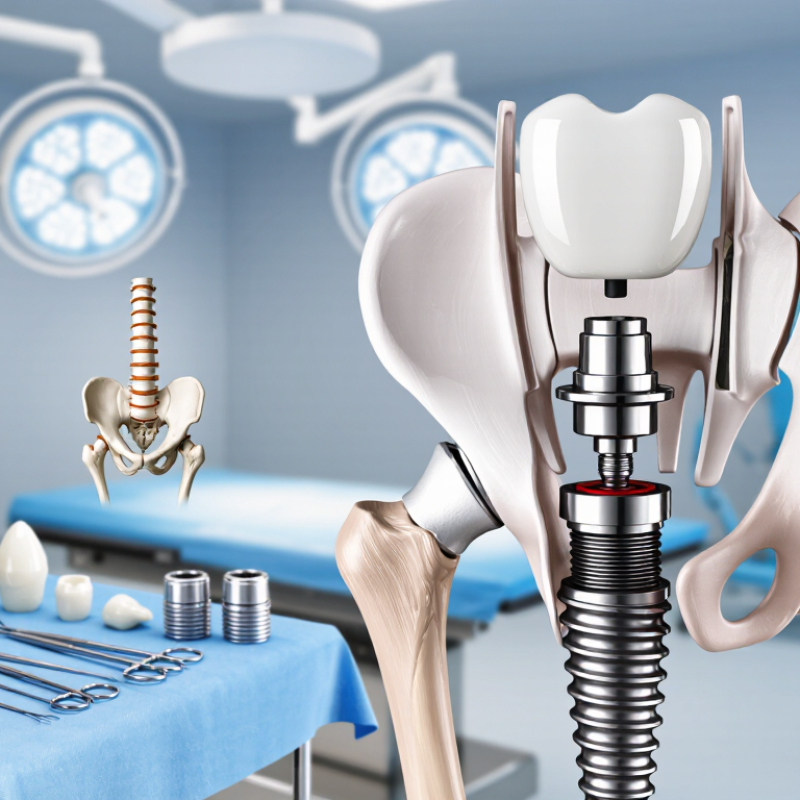
China Best Eternity Dual Mobility Hip Supplier?

What Is an Eternity Dual Mobility Hip System?

An eternity dual mobility hip system is a total hip replacement designed to improve stability and movement. The term “eternity” suggests durability, but it does not mean the implant lasts forever. A careful explanation matters.

Its structure differs from a conventional hip implant. A small femoral head moves inside a mobile polyethylene liner. The liner then moves inside a metal acetabular cup. This dual articulation can increase the effective head size and reduce the chance of dislocation. Patients may gain more freedom during sitting, walking, and daily movement. That matters.

In clinical practice, surgeons assess bone quality, activity level, anatomy, and previous hip surgery before choosing this design. Radiographs help evaluate cup position, fixation, and possible wear over time. Material selection and manufacturing accuracy also influence performance. Quality control records, sterilization data, and regulatory documentation should be available from a reliable supplier.

The design has limitations. Wear, loosening, infection, component damage, and intraprosthetic dislocation can still occur. It is not magic. Long-term outcomes may vary between patients and implant designs. Some evidence supports dual mobility systems for reducing dislocation risk, especially in revision surgery and high-risk cases. However, every claim should match independent clinical data, not only sales language. A qualified orthopedic team must make the final decision after reviewing the patient’s condition, imaging, and expected activity.

How Does Dual Mobility Hip Technology Work?

How Does Dual Mobility Hip Technology Work?

Dual mobility hip technology uses two moving surfaces instead of one. A small femoral head moves inside a mobile polyethylene liner. The liner then moves inside a metal acetabular shell. This design increases the effective head size and may improve hip stability during daily movement.

In practice, the larger mobile bearing can provide more freedom for walking, sitting, and climbing stairs. It may also reduce the risk of dislocation compared with some conventional hip designs. However, it is not a magic solution. Component positioning, soft-tissue balance, patient activity, and surgical technique still matter greatly.

Clinical teams usually assess bone quality, age, anatomy, and revision risk before choosing this option. Manufacturing quality also deserves close attention. Reliable suppliers should provide material certificates, dimensional inspection records, sterilization information, and traceable production data. Testing should examine wear, fatigue, fixation, and movement under realistic loads.

Small details matter.

A liner that moves poorly may create unwanted wear or mechanical problems. Long-term results can also vary between patients and implant designs. That uncertainty should remain part of informed clinical discussion. From a supplier’s perspective, transparent documentation and consistent quality control are as important as production capacity. The best choice depends on verified evidence, surgeon experience, and the patient’s individual needs.

China Best Eternity Dual Mobility Hip Supplier? - How Does Dual Mobility Hip Technology Work?

Evaluation Dimension Technical Information Why It Matters Supplier Verification Point
Operating Principle A dual mobility construct uses a small femoral head captured inside a larger mobile polyethylene insert. The insert moves within a metal acetabular shell. The two articulating interfaces can increase effective head size and may improve stability compared with a conventional fixed-bearing design. Request engineering drawings, assembly specifications, and evidence that the insert is securely retained while remaining mobile.
Primary Stability Feature The mobile insert provides a large effective articulation radius and can increase jump distance before dislocation. This is particularly relevant when instability risk is elevated, including revision procedures and selected neuromuscular or trauma cases. Review clinical indications, published outcomes, dislocation data, and the intended surgical technique.
Bearing Materials Common configurations combine a cobalt-chromium or ceramic femoral head, a highly cross-linked polyethylene mobile insert, and a titanium-based acetabular shell. Material pairing influences wear, corrosion resistance, strength, imaging characteristics, and compatibility with the intended stem and shell. Verify material certificates, applicable standards, surface treatments, traceability, and compatibility data.
Polyethylene Insert The insert typically has an inner bearing surface for the femoral head and an outer spherical surface that articulates with the acetabular shell. Geometry, manufacturing quality, oxidation resistance, and locking design affect wear performance and long-term mobility. Ask for dimensional inspection records, aging and oxidation data, wear testing, and validated sterilization information.
Acetabular Shell The shell is commonly hemispherical and may use a porous or roughened outer surface to support biological fixation. Shell geometry and fixation influence implant positioning, initial stability, and the potential for long-term bone integration. Confirm coating characteristics, pore structure or surface roughness, fixation options, and pull-out or micromotion test results.
Motion and Range The femoral head and insert move relative to one another, while the insert can also move relative to the shell. Actual motion depends on implant geometry and component positioning. The design can provide a broad functional range of motion, but it does not eliminate impingement or dislocation risk. Request range-of-motion, impingement, and fatigue test protocols performed under representative loading conditions.
Wear Considerations Dual mobility introduces two bearing interfaces. Wear may occur at the inner head–insert and outer insert–shell articulations. A well-designed system may provide favorable wear performance, but additional interfaces require specific testing and monitoring. Review simulator testing, gravimetric wear measurements, particle analysis, and test duration against recognized standards.
Potential Complications Reported concerns can include infection, loosening, periprosthetic fracture, wear, dislocation, intraprosthetic dislocation, and adverse tissue reactions. Dual mobility may reduce conventional dislocation risk in selected patients, but it does not remove general arthroplasty risks. Evaluate risk-management files, complaint trends, post-market surveillance, corrective-action procedures, and clinical follow-up.
Clinical Use Cases Commonly considered for primary total hip arthroplasty patients with higher instability risk and for selected revision procedures, subject to surgeon judgment. Patient anatomy, bone quality, activity level, surgical approach, and the cause of revision all affect suitability. Confirm that labeling, indications, contraindications, and training materials align with the target market and clinical evidence.
System Compatibility Compatibility depends on shell dimensions, insert size, femoral head diameter, taper geometry, stem interface, and available instrumentation. Incorrect combinations can compromise assembly, stability, articulation, or regulatory compliance. Require a controlled compatibility matrix, tolerance analysis, surgical instruments, and clear component-identification procedures.
Quality Management Manufacturing should be controlled through a documented medical-device quality system covering design, production, inspection, sterilization, and traceability. Consistent process control is essential for implantable products where dimensional or material variation can affect patient safety. Audit quality certificates, validation records, batch-release criteria, supplier controls, and nonconformity handling.
Regulatory Documentation A complete technical file generally includes risk management, biological evaluation, mechanical testing, sterilization validation, packaging validation, labeling, and clinical evidence. Documentation demonstrates that the product has been evaluated for safety and performance under applicable market requirements. Check current registrations, certificates, authorized scope, clinical evaluation, and change-control records for the exact product configuration.
Supply and Service Capability Reliable supply requires controlled inventory, lot traceability, validated packaging, product training, technical support, and a documented post-market process. Implant availability and responsive support help reduce surgical disruption and improve continuity of care. Assess lead times, minimum order quantities, inventory policy, instrument availability, training resources, complaint response time, and warranty terms.

Note: Product selection and clinical use should be based on qualified medical-professional judgment, applicable regulations, and evidence for the specific implant system.

What Makes a China-Based Supplier Stand Out?

China Best Eternity Dual Mobility Hip Supplier?

A China-based supplier stands out through verified manufacturing, not low pricing alone. The National Joint Registry’s 21st Annual Report (2024) contains over three million joint-replacement records. Such data highlights the need for traceable, long-term performance. A capable supplier should provide material certificates, batch records, dimensional inspection, and sterilization validation. Traceability matters.

For dual-mobility hips, engineering details deserve close review. Ask for evidence from fatigue, wear, range-of-motion, and dislocation-resistance testing. ISO 7206 test methods can support technical comparisons. ISO 13485 certification also indicates a structured medical-device quality system. However, certification is not clinical proof. A polished brochure is not proof.

During supplier audits, inspect machining rooms, clean areas, metrology equipment, and nonconforming-product controls. Request anonymized complaint data and corrective-action records. The World Health Organization’s Global Patient Safety Action Plan stresses learning from adverse events and improving reporting systems. That principle should guide supplier evaluation. I would still challenge every impressive claim, especially when clinical follow-up is limited. Experienced teams should explain design choices clearly, disclose production limits, and support surgeon training without overstating results. Reliability grows through evidence, communication, and repeated delivery.

What Makes a China-Based Dual Mobility Hip Supplier Stand Out?

A strong supplier should demonstrate documented quality, risk-management, biocompatibility, and implant-performance controls aligned with internationally recognized standards. The chart shows the publication year of key reference standards commonly used during supplier qualification.

Reference standards: ISO 13485:2016 for medical-device quality management, ISO 10993-1:2018 for biological evaluation, and ISO 14971:2019 for medical-device risk management. Edition status should be verified during procurement and technical due diligence.

How to Evaluate Eternity Hip Implant Quality and Compliance?

Evaluating an eternity dual mobility hip supplier requires more than comparing prices. Start with documented manufacturing experience, trained engineers, and a stable quality management system. Ask for current ISO 13485 certification and applicable regulatory approvals. Check whether certificates match the actual factory and product scope. A polished website proves little.

Review the implant’s materials, surface finish, locking mechanism, and dimensional tolerances. Request test reports for fatigue, wear, dislocation resistance, and assembly strength. The reports should identify test methods, sample sizes, and laboratories. Look for clear traceability from raw material batches to finished components. Packaging should protect sterile barriers during transport and storage. Small details matter.

Clinical evidence deserves careful attention. A supplier should provide published data, risk evaluations, and post-market surveillance records where available. Do not accept vague claims about lifetime performance. Ask how complaints are investigated and how corrective actions are documented. Personally, I would examine sample instruments under magnification and verify fit with trial components. This step can reveal rough edges or inconsistent markings. It is easy to overlook. Supplier audits also need realism; a single successful visit cannot prove long-term consistency. Allow room for doubt, record every unanswered question, and compare evidence before approving the supplier.

How to Select the Best Eternity Dual Mobility Hip Supplier?

How to Select the Best Eternity Dual Mobility Hip Supplier?

When selecting a China-based dual mobility hip supplier, begin with clinical evidence, not catalog photos. The 2024 National Joint Registry report covers more than 20 years of hip-replacement data. It shows that revision outcomes depend on patient age, fixation method, bearing design, and follow-up duration. Ask suppliers for comparable evidence. Five-year results matter, but ten-year surveillance matters more. A polished brochure is not evidence.

Check the supplier’s quality system, production controls, and traceability records. ISO 13485 certification should be verified through the issuing body. Request material certificates for cobalt-chromium, titanium, polyethylene, and ceramic components. Review sterilization validation, packaging integrity, and batch-level records. The 2023 American Joint Replacement Registry report also demonstrates why longitudinal data should guide purchasing decisions. Ask for dislocation, revision, infection, and implant-survival data from identifiable clinical sources. Be cautious when figures lack denominators.

A practical audit should inspect machining, cleaning, assembly, and final release areas. It should also test how quickly the supplier handles a simulated complaint. My own bias can favor a technically impressive factory, yet service failures may appear later. Request samples from different production batches. Confirm surgeon training, instrument compatibility, regulatory documentation, and post-market reporting procedures. A supplier unwilling to share controlled records deserves slower consideration.

Zer0 Product Recalls

Why Shalby MedTech

We are committed to deliver solutions and transforming the way joint replacement procedures are performed.

Reliability
Integrity
Teamwork