China Top 10 Aerosol Chamber Spacer Manufacturers?
An Aerosol Chamber Spacer may look like a small, simple component. In practice, its fit can affect chamber alignment, airflow, sealing, and repeatable test results. A spacer that is slightly too thick may shift adjoining parts; one with a poor surface finish may complicate cleaning. Small details matter.
This guide to China’s top 10 manufacturers is intended as a practical starting point for engineers, laboratory buyers, and equipment teams. Rather than treating “top 10” as a certified ranking, compare suppliers using clear evidence: product dimensions, material options, machining capability, quality documentation, customization support, and response times. Ask for drawings or samples when specifications are unclear. Check that the spacer suits the chamber design and operating conditions, not just the listed model name.
A polished catalog helps, but it cannot answer every question. There is no perfect shortcut. Manufacturing claims should be confirmed directly, and critical tolerances should be reviewed with the supplier before ordering. Public information may be incomplete, and a company’s strengths can vary by product line. That is worth admitting. The manufacturers discussed in the article can help narrow the search, while careful technical checks help buyers make a more reliable choice.
Aerosol Chamber Spacers: Definition, Types, and Role in Inhaled Drug Delivery
An aerosol chamber spacer is an add-on chamber used with a pressurized metered-dose inhaler. It holds the aerosol briefly, giving the user more time to breathe in after actuation. This can reduce the need to coordinate pressing and inhaling at exactly the same moment. It may also limit some larger droplets from reaching the mouth and throat, though performance depends on the device and technique.
Spacers vary in chamber volume, valve design, material, and interface. Some use a mouthpiece; others include a face mask for people who cannot form a reliable seal around a mouthpiece. A one-way valve can help direct inhalation and exhalation. These differences matter. A spacer must fit the inhaler and the user, and clinicians should guide selection when treatment needs are complex. A chamber is helpful, not magic; poor fit or technique can still reduce the delivered dose. Even experienced users may need to review their routine.
Tips: Keep the chamber clean according to its instructions, and inspect the valve for damage or sticking. Breathe in steadily after actuation. If the mask seal feels uncertain, pause and ask a healthcare professional to check the technique.
How 1–5 μm Aerosol Particles Shape Spacer Performance and Testing
Aerosol particles between 1 and 5 μm can reveal whether a chamber spacer supports stable, repeatable testing. Particles near 1 μm tend to follow airflow closely, while particles nearer 5 μm are more affected by inertia and may deposit on bends or chamber walls. Small changes in spacer length, opening size, or surface finish can alter local flow. That can shift particle recovery and measured concentration. Small particles matter.
Testing should use a defined airflow and a documented particle-size distribution. Record pressure drop, particle recovery, and variation across repeated runs. Inspect seals and spacer surfaces before each test; a slight leak or residue can distort results. Compare multiple spacer configurations under identical conditions, rather than relying on one favorable run. A visually clean chamber is not proof of uniform particle transport, and this is easy to overlook.
Tips: Keep the inlet flow steady and allow the chamber to stabilize before sampling. Use calibrated particle-measurement equipment, and note temperature and humidity. Check the seals. If results vary, test whether the cause is spacer geometry, particle loss, or instrument setup before changing several factors at once. One limitation remains: a chamber test may not reproduce every real-use condition, so report the test setup clearly.
ISO 20072 and Key Quality Criteria for Comparing Chinese Spacer Manufacturers
When comparing Chinese aerosol chamber spacer manufacturers, treat ISO 20072 as a verification reference, not a badge. It sets requirements and test methods for design verification of aerosol drug delivery devices. It does not certify every factory or guarantee performance with every inhaler and medication combination. Ask which tests apply to the spacer, and request dated reports linked to the tested model.
Inspect details that affect use: chamber dimensions, connector fit, seal consistency, airflow resistance, material stability, and electrostatic behavior. Ask how measurements are taken and how often production samples are checked. Request material records and results from repeated batches, not only a polished prototype. A small connector mismatch can cause leakage or awkward handling. Not trivial.
Compare test methods, acceptance limits, sample identification, and corrective-action records. Confirm whether testing is internal or independent, and whether design or material changes trigger revalidation. Check lot traceability and controls for molding, assembly, and packaging. Lower prices may appeal, but limited records leave uncertainty. No checklist removes judgment; suppliers may document results clearly yet explain their practical relevance poorly. Ask follow-up questions and record unresolved gaps before choosing a manufacturing partner.
China’s Top 10 Aerosol Chamber Spacer Manufacturers: Products and Capabilities
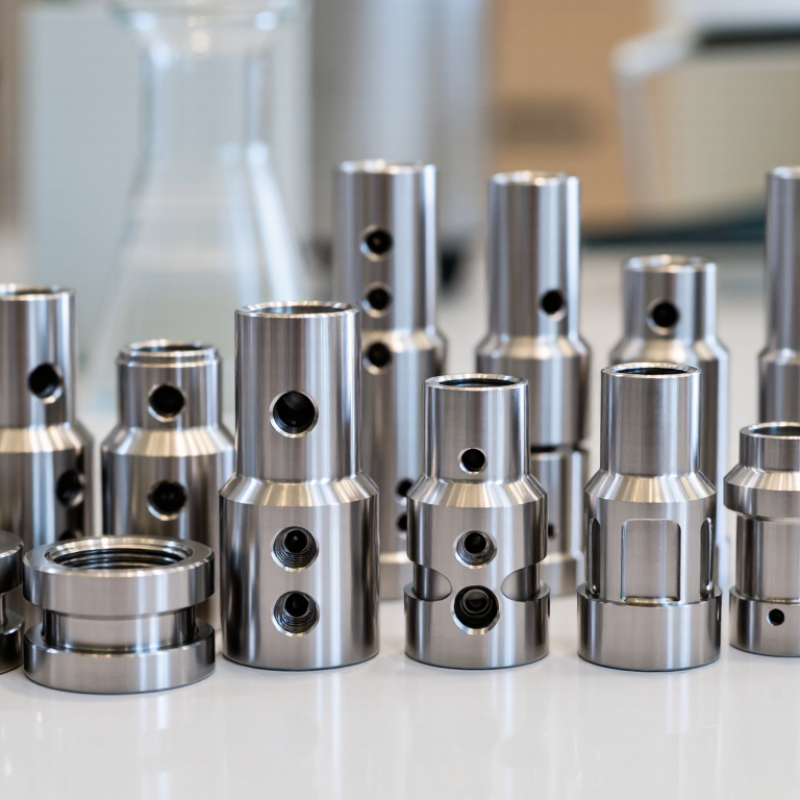
China’s top 10 aerosol chamber spacer manufacturers can be compared by product range, machining capability, and inspection practices. Typical offerings include fixed or adjustable spacers made to match chamber dimensions, with options for different materials and surface finishes. Some suppliers support custom drawings, small-batch production, and dimensional reports. Ask how they control flatness, hole positions, and thickness; these details can affect alignment and repeatable assembly. A polished catalogue is useful, but it does not replace a sample check.
Capabilities vary. One workshop may handle rapid CNC machining, while another focuses on stable production runs and documented inspections. Confirm the drawing revision, tolerance requirements, material grade, and packaging before ordering. Request a sample or measured inspection record, then check the spacer against the actual chamber assembly. Even experienced buyers can overlook fit. That happens.
Tips: Share a dimensioned drawing and intended operating conditions. Check thickness and edge finish on arrival, and record any mismatch before installation. Ask suppliers to explain how they verify critical dimensions, rather than relying on broad quality claims.
How to Verify Supplier Compliance, Materials, and Production Quality
When comparing China’s aerosol chamber spacer manufacturers, verify documents against the actual production line. The ISO Survey of Management System Standard Certifications recorded more than 1.26 million ISO 9001 certificates worldwide in 2022. Certification is a useful screening signal, not proof that each spacer meets your drawing. Ask for the current certificate, its scope, and the production site covered. Then compare a recent inspection report with the part number and batch you intend to order.
Material claims need evidence. Request material certificates that identify the alloy or polymer grade, supplier, and batch number. Check critical dimensions, surface finish, and corrosion resistance against your application. A sample should be measured with calibrated instruments, not judged by eye. Small deviations matter. Also review how rejected parts are recorded and how corrective actions are verified. A polished audit file can still miss a weak production step.
Quality systems have a cost. ASQ’s Cost of Quality guidance notes that poor quality may consume roughly 5%–30% of sales, depending on the organization and how costs are measured. For buyers, that makes traceability and process checks more than paperwork. Request first-article results, lot-level inspection records, and evidence that measurement equipment is calibrated. If reports look incomplete, pause and ask again. It is easy to over-trust a certificate.
China Aerosol Chamber Spacer Suppliers: A Practical Verification Scorecard
Suggested audit emphasis for evaluating supplier evidence—not measured supplier results or an official industry standard. Verify applicable regulatory requirements for the destination market and product.
How to use: Request applicable compliance documents, material specifications and test records, production inspection procedures, and lot-level traceability evidence. The point values are a proposed 100-point review framework; they are not certification criteria or claims about any supplier.




 Reliability
 Integrity
 Teamwork
 Looking for the
 Register as