How to Choose an Aluminum Patient Transfer Chair?
Choosing the right transfer chair can affect safety, comfort, and daily workflow. An Aluminum Patient Transfer chair may look simple, yet small design differences matter during real patient movement. Frame strength, seat width, brake access, and footrest position deserve careful attention. A chair that feels stable in a showroom may behave differently on a narrow hallway or uneven floor.
This guide explains the practical features that caregivers, rehabilitation professionals, and healthcare buyers should assess. Check the manufacturer’s weight capacity, product dimensions, folding method, and cleaning instructions. Confirm that the seat supports the user without creating pressure points. Padded armrests may improve comfort, while removable or swing-away footrests can make lateral transfers easier. Locking casters should engage smoothly and remain secure during movement. Test them with the chair occupied, when appropriate and safely supervised.
Details matter.
Material choice also requires honest evaluation. Aluminum often offers a lighter frame than traditional steel, which can reduce lifting effort. However, lighter does not automatically mean better. Frame rigidity, joint quality, corrosion resistance, and long-term maintenance still influence performance. A poorly adjusted brake or loose fastener can undermine an otherwise excellent design. That possibility is easy to overlook. We will compare these factors with real-use conditions, user needs, and verified specifications. No single chair fits every patient, caregiver, or facility. The best choice balances portability, stability, comfort, and dependable support rather than relying on appearance alone.
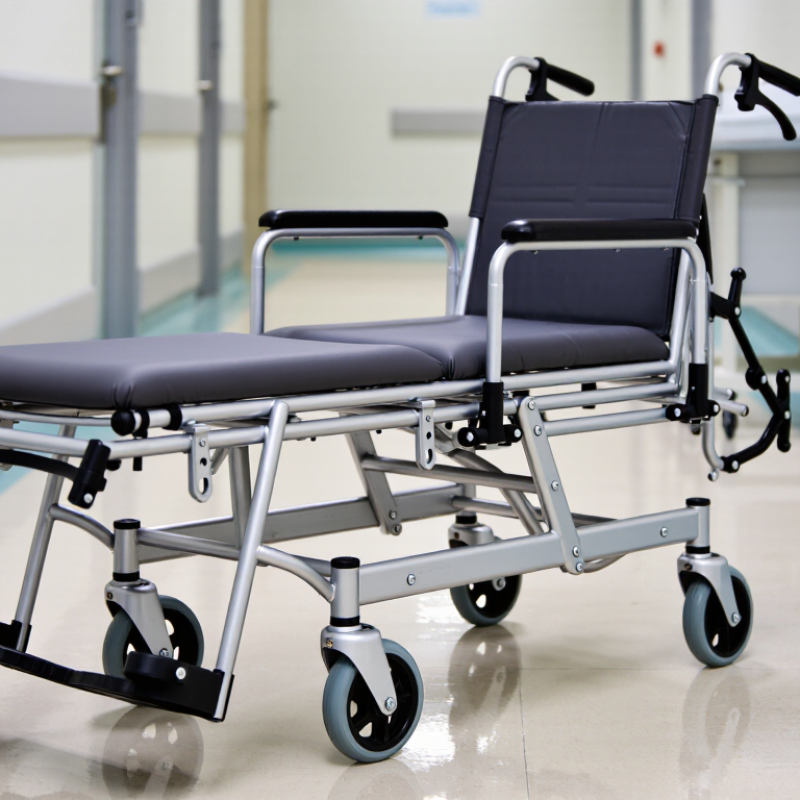
Define Patient, Caregiver, and Environment Requirements Before Comparing Chairs
How to Choose an Aluminum Patient Transfer Chair?
Define Patient, Caregiver, and Environment Requirements Before Comparing Chairs
Start with the patient, not the frame material. Record weight, height, trunk control, skin sensitivity, and transfer ability. Note whether the patient can stand briefly. A person with weak balance may need lateral supports, a secure belt, or a wider seat. WHO’s Global Report on Assistive Technology estimates that 2.5 billion people need assistive products today. That figure may exceed 3.5 billion by 2050. Needs are becoming more varied.
Assess the caregiver honestly. Can one person push, brake, and guide safely? OSHA’s safe patient handling guidance emphasizes worker capability, patient mobility, and task conditions. An aluminum chair can reduce lifting effort, but low weight does not guarantee control. Check handle height, brake access, wheel size, and the chair’s rated load. The U.S. Bureau of Labor Statistics reported 2.6 million nonfatal workplace injuries and illnesses in private industry in 2023. Not every case involves transfers, but the handling risk deserves attention.
Measure the environment with a tape measure. Check door widths, elevator depth, toilet clearance, floor thresholds, and turning space. A compact chair may fit a bathroom yet feel unstable over a raised threshold. Test the route with a real load, if possible. Lighting and wet floors matter. Cleaning routines matter too. Aluminum resists corrosion, but joints, upholstery, and fasteners still need inspection. I would not trust a specification sheet alone. Measurements can be wrong. Staff habits can change. Recheck the chair after a week of daily use.
Check Folded Dimensions Against ADA’s 32-Inch Accessible Route Standard
How to Choose an Aluminum Patient Transfer Chair?
When choosing an aluminum patient transfer chair, check its folded dimensions carefully. A folded chair may fit a vehicle yet still create problems beside an accessible route. The ADA Accessible Design Standards specify a 32-inch minimum clear width at certain route points, while longer portions commonly require 36 inches. Measure doorways, corridor pinch points, and threshold areas with a tape measure. Do not rely only on the chair’s listed width.
A practical check is simple. Fold the chair completely, then measure its height, width, and depth. Account for footrests, wheels, handles, and any parts that extend outward. I would also measure the chair while occupied, because a compact folded size does not guarantee comfortable passage during use. This is where product descriptions can mislead. A few millimeters may matter near a narrow bathroom entrance. Confirm the measurements with a facility manager or accessibility professional when the route is critical.
Tips: Mark a 32-inch line on the floor using removable tape. Test the chair through it with doors opened to their normal position. Leave extra clearance for hands, clothing, and controlled turning. Check the folded chair inside the intended vehicle, too. I once underestimated handle space; the chair fit, but lifting it felt awkward and unsafe. A second person should verify the route before purchase.
How to Choose an Aluminum Patient Transfer Chair?
Check the chair’s folded width against the ADA minimum clear width of 32 inches for an accessible route. The representative folded-width measurements below are non-branded reference values; always confirm the manufacturer’s current specification before purchase.
How to read the chart: A smaller folded width generally makes storage and transport easier. The 32-inch ADA value is a clear-route requirement, not a recommended folded chair size. A folded chair should not obstruct the accessible route when stored or transported.
Assess Hygiene, Warranty, Service Life, and Total Cost per Transfer
Choosing an aluminum patient transfer chair requires more than checking frame weight. Hygiene deserves close inspection. Look for smooth welds, sealed joints, removable cushions, and open areas around the seat. These details reduce trapped moisture and make cleaning easier. Ask whether the upholstery tolerates the disinfectant used in your facility. Some materials crack after repeated wiping. That is easy to miss. A chair that looks clean may still retain fluid beneath a poorly fitted cushion. Trial cleaning should include corners, wheel guards, and footrests. Record drying time.
Warranty terms reveal expected support. Read coverage for casters, brakes, armrests, fasteners, and upholstery, not only the aluminum frame. Confirm who pays freight and labor. Ask whether replacement parts remain available after the warranty ends. A responsive service team should provide inspection guidance and realistic repair times. Keep purchase records and maintenance logs. They support claims and prevent avoidable disputes. Still, warranty length is not service life. Daily transfers, rough thresholds, and chemical exposure can shorten it. A longer warranty may exclude the parts that wear fastest.
Calculate total cost per transfer using purchase price, accessories, cleaning supplies, repairs, staff time, downtime, and replacement. Divide that amount by completed transfers, not planned transfers. This distinction matters. A low-priced chair used twice daily may cost more than a durable chair used ten times daily. Track caster failures and cleaning minutes for three months. The result will be imperfect, but useful. Test the chair with gloved staff and actual transfer routes. Measure turning space, brake access, and patient comfort. Small failures become expensive when repeated.
How to Choose an Aluminum Patient Transfer Chair? - Assess Hygiene, Warranty, Service Life, and Total Cost per Transfer
Non-brand comparison using common market specifications and a transparent total-cost model for healthcare, rehabilitation, and long-term-care applications.
| Chair Profile | Typical Purchase Price
(USD) | Frame and Surface Design | Hygiene and Cleaning Assessment | Typical Cleaning Time
(minutes) | Typical Warranty
(years) | Expected Service Life
(years) | Maximum User Weight
(lb) | Estimated Annual Transfers | Estimated Total Cost per Transfer
(USD) | Best-Fit Use Case |
| Compact Basic Aluminum Chair | $250–$350 | Lightweight aluminum frame, removable footrests, basic vinyl seat and backrest. | Moderate
Cleanable vinyl is suitable for routine disinfection, but exposed fasteners and fabric-backed cushions may increase inspection time. | 5–7 | 1–2 | 4–6 | 250–300 | 1,500–2,000 | $1.65–$1.95 | Low- to medium-frequency transport in clinics, outpatient departments, and residential care. |
| Standard Folding Transfer Chair | $300–$450 | Folding aluminum frame, swing-away footrests, padded seat, rear locking casters. | Good
Removable parts simplify cleaning; verify that upholstery is compatible with the facility’s approved disinfectants. | 4–6 | 1–3 | 5–7 | 250–300 | 1,800–2,400 | $1.60–$1.90 | General hospital and care-home transport where storage space and portability matter. |
| Clinical-Efficiency Aluminum Chair | $550–$750 | Reinforced aluminum frame, sealed padded upholstery, corrosion-resistant hardware, adjustable foot support. | Very good
Sealed surfaces and fewer absorbent seams support faster wipe-down and reduce the risk of retained moisture. | 3–5 | 2–3 | 7–9 | 300–350 | 2,000–2,800 | $1.75–$2.25 | High-frequency transport in hospitals, imaging areas, emergency departments, and rehabilitation facilities. |
| Heavy-Duty Aluminum Transfer Chair | $750–$1,050 | Reinforced aluminum frame, wider seat, heavy-duty casters, strengthened footrests and wheel locks. | Moderate to good
Durable surfaces support repeated cleaning, but the larger frame and additional hardware require more inspection points. | 5–8 | 2–3 | 7–10 | 350–500 | 1,000–1,800 | $2.20–$3.00 | Users requiring a higher weight capacity or additional seating width. |
| Sealed-Surface Long-Life Chair | $700–$950 | Aluminum frame, sealed medical-grade upholstery, enclosed or protected hardware, replaceable high-wear components. | Very good
Low-absorption surfaces and replaceable covers can support consistent infection-control procedures over a longer service period. | 3–5 | 2–5 | 8–10 | 300–350 | 1,800–2,600 | $1.80–$2.30 | Facilities prioritizing long service life, predictable cleaning, and reduced replacement frequency. |
Cost Calculation Assumptions | Cost Element | Benchmark Used | How It Affects the Result |
| Ownership period | Expected service life shown for each chair profile | Purchase price is distributed across the estimated number of transfers during the ownership period. |
| Annual maintenance | Approximately $30–$90 per chair per year | Includes routine inspection, wheel or caster replacement allowance, fastener checks, and minor component replacement. |
| Cleaning consumables | Approximately $0.45–$0.80 per transfer | Represents disinfectant, disposable wipes or cloths, gloves, and other routine cleaning materials. |
| Cleaning labor | Approximately $0.20–$0.30 per cleaning minute | Shorter cleaning times reduce labor cost when the chair is used frequently. |
| Total cost per transfer formula | (Purchase price + lifetime maintenance + cleaning consumables + cleaning labor) ÷ lifetime transfers | The result is an operational estimate; local labor rates, transfer volume, repair costs, and disinfectant protocols will change the final figure. |
Selection checklist: Confirm the documented user-weight capacity, compatibility with approved disinfectants, upholstery absorption characteristics, replacement-part availability, warranty exclusions, caster and brake coverage, expected delivery time for service parts, and whether the manufacturer provides written maintenance instructions. A lower purchase price is not always the lowest-cost option when cleaning time, downtime, and replacement frequency are included.




 Reliability
 Integrity
 Teamwork
 Looking for the
 Register as