
Choosing Knee Replacement Systems for Global Buyers requires more than comparing prices or catalog images. The decision affects mobility, surgical workflow, rehabilitation, and long-term patient confidence. HSS knee-replacement specialist Dr. Geoffrey Westrich states, “The goal of knee replacement surgery is to relieve pain and restore function.” That principle should guide every purchasing discussion.
Global buyers should examine implant design, fixation method, bearing materials, sizing ranges, and instrument compatibility. A system must fit local patient anatomy. It must also match surgeons’ training and operating-room routines. Cemented, cementless, and hybrid options may perform differently across patient groups. Clinical evidence matters. So does the quality of revision support. Ask for published outcomes, registry data, sterilization information, and clear instructions for use. Confirm regulatory approvals in each target market. Check manufacturing consistency and traceability. Small details can become major problems.
Cost deserves careful analysis. The lowest quotation may exclude training, instruments, logistics, or replacement components. A higher-priced system may offer stronger education and dependable after-sales service. Still, assumptions should be challenged. No purchasing matrix is perfect. Long-term data may be limited for newer designs. Local evidence may not match results from another population. Buyers should acknowledge that uncertainty rather than hide it behind confident marketing language. A practical evaluation combines surgeon feedback, hospital needs, patient characteristics, and verified clinical performance. The right Knee replacement systems choice is not simply the newest or cheapest option. It is the most supportable decision for safe, consistent, and durable care.
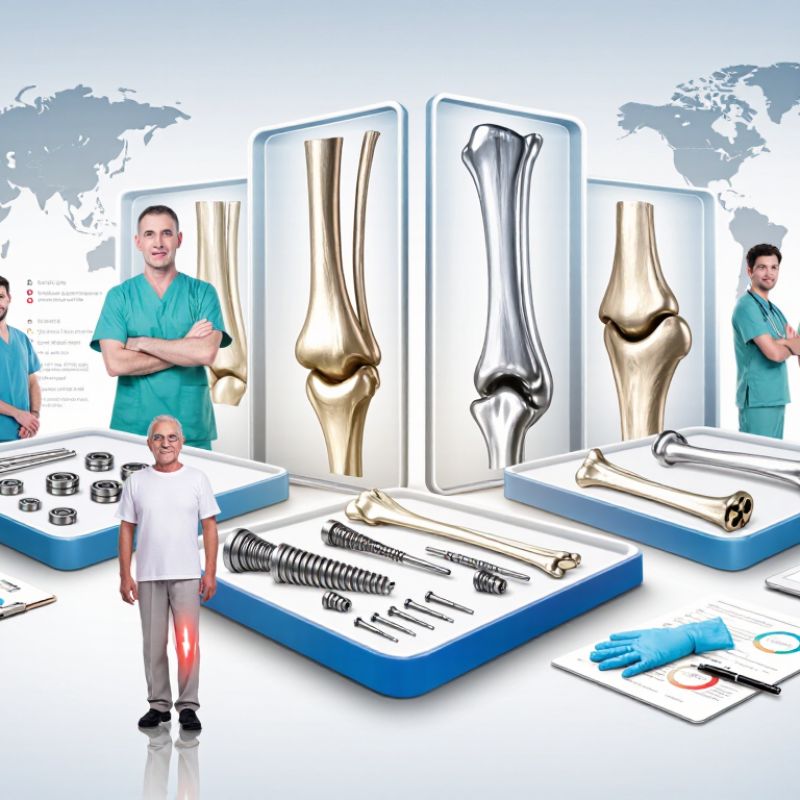
A knee replacement system usually includes femoral, tibial, and patellar components. Some designs replace the entire joint, while partial systems preserve healthy bone and ligaments. Total knee systems are common for widespread arthritis. Partial systems suit carefully selected patients with damage in one compartment.
Design differences matter.
Fixed-bearing systems keep the plastic insert stable on the tibial tray. Mobile-bearing systems allow limited insert movement, aiming to reduce stress. Cruciate-retaining designs preserve the posterior cruciate ligament when it remains functional. Posterior-stabilized designs use a cam-and-post mechanism instead. Highly constrained or hinged systems provide greater stability, but they may require more bone removal. They are generally considered for complex instability or revision cases.
Clinical evidence should guide procurement, not attractive product claims.
Buyers should review implant survival data, radiographic outcomes, surgical compatibility, and training requirements. The surgeon’s familiar approach often matters more than a small design difference. It affects operating time and the risk of avoidable errors.
Small details count.
Instrument trays, sterilization workflows, sizing ranges, and revision availability can influence real-world performance. Global hospitals should also verify regulatory authorization, traceability, technical files, and post-market reporting in each target market.
A low purchase price can become expensive after shipping delays or missing components. I have found that comparison tables sometimes hide practical weaknesses. That deserves a second review.
Bone quality, patient activity, local anatomy, and surgeon expertise should shape the final choice. No system fits every patient. The best decision combines published evidence, local clinical judgment, and dependable long-term support.
Choosing a knee replacement system should begin with the patient, not the product catalogue. Review age, activity level, pain severity, bone quality, and previous procedures. Weight-bearing X-rays can reveal alignment, joint-space loss, and bone defects. Long-leg imaging may be useful when deformity affects the mechanical axis.
The surgeon should also assess ligament stability, range of motion, and soft-tissue balance. A patient with severe varus deformity may require different support than one with relatively stable ligaments. Implant sizing must match available anatomy, especially for patients with smaller or unusually shaped bones. Small mismatches can affect balance, movement, and revision risk.
Surgical requirements matter just as much. Confirm whether the system supports the hospital’s preferred alignment method, fixation technique, and instrument workflow. Instruments should be intuitive, sterilizable, and available in the sizes surgeons commonly use. Training is essential when staff adopt unfamiliar equipment. So is reliable technical support.
A scoring sheet helps, but it cannot replace clinical judgment. It may overlook surgeon experience or local rehabilitation limits. Global buyers should examine regulatory documentation, quality records, traceability, and evidence from comparable patient populations. Cost matters, yet unreliable supply can delay surgery. In practice, the best choice may not be the most advanced system. It should fit the patient, the surgeon, and the operating room.
How to Choose Knee Replacement Systems for Global Buyers?
Implant design should match anatomy, activity, and surgical practice. A fixed-bearing design may offer predictable stability and simpler inventory control. A mobile-bearing design permits additional movement but demands accurate alignment and soft-tissue balancing. Cruciate-retaining and posterior-stabilized options also affect ligament management. The AOANJRR 2024 Annual Report indicates that primary knee replacement revision rates remain near 5% to 6% at ten years, depending on patient and implant factors. Small design differences can matter.
Material selection requires clinical evidence, not attractive specifications. Cobalt-chromium alloys provide strong wear resistance, while titanium alloys are lighter and commonly support porous fixation surfaces. Highly cross-linked polyethylene may reduce wear, but manufacturing quality and sterilization still influence performance. Ceramic components can reduce metal use, yet they may increase cost and complicate supply planning. More advanced is not always better.
Fixation is equally important. Cemented fixation has extensive long-term evidence and remains practical across many healthcare systems. Cementless fixation may support biological bone integration, especially in selected younger patients, but bone quality and surgical technique are critical. The UK National Joint Registry’s 21st Annual Report shows that revision risk varies by age, fixation, and procedure type. Registry results guide decisions, but they cannot replace local follow-up data. Global buyers should compare ten-year survivorship, complication reporting, instrument reliability, and training requirements. I would also question any supplier claiming universal superiority. Real-world outcomes are rarely that simple.
How to Choose Knee Replacement Systems for Global Buyers?
This evidence-informed screening matrix compares common knee replacement approaches on a 1–5 scale. Higher scores indicate greater suitability for the stated selection factor, not superior clinical outcomes. Cruciate-retaining designs generally preserve the posterior cruciate ligament, posterior-stabilized designs provide greater geometric constraint, cobalt-chromium alloys offer high hardness and corrosion resistance, and cemented fixation provides immediate fixation while cementless fixation depends on bone ingrowth.
Global buyers should evaluate knee replacement systems through evidence, not attractive product claims. Manufacturer experience matters, but production discipline matters more. Review facility audits, material traceability, sterilization controls, and complaint-handling procedures. A reliable supplier should provide clear technical files and consistent batch records. Ask how design changes are reviewed and documented. Small gaps can become expensive problems.
Quality standards should match the destination market and the hospital’s requirements. Check conformity with recognized medical-device standards, risk-management processes, and biocompatibility testing. Clinical evidence deserves close attention. Look for peer-reviewed studies, follow-up periods, revision rates, and patient-reported outcomes. Evidence from one population may not fully represent another. That limitation should be discussed openly.
In practice, surgeons also need usable instrumentation, predictable sizing, and training support. These details are easy to underestimate.
Tips: Request complete evidence packages before commercial discussions. Compare five-year and ten-year outcomes when available. Ask independent surgeons about implantation workflow and difficult cases. Do not rely on a single evaluation score. Examine whether reported results reflect real-world practice, not only controlled trials. I have seen promising specifications lose value when instruments were awkward or support was slow. That is worth reconsidering.
Choosing knee replacement systems for global procurement requires more than comparing implant prices. Buyers should map clinical needs, annual procedure volumes, surgeon preferences, and instrument availability. A lower quotation may hide training costs, customs delays, or limited revision options. Ask for complete technical files, material specifications, sterilization details, shelf-life data, and clear instructions for use.
Regulatory compliance must be checked country by country. Confirm market authorization, local representation, import requirements, labeling languages, and unique device identification obligations. Request clinical evidence, risk-management records, quality certificates, and post-market surveillance procedures. Documents should match the supplied configuration. Small inconsistencies can delay registration or hospital acceptance. No checklist catches every risk.
Long-term support deserves equal attention. Review training plans, operating-room instrumentation, inventory policies, complaint response times, and product change notifications. Define service contacts and escalation routes before signing a contract. A practical evaluation includes sample packaging, instrument tracking, and simulated delivery to a target hospital. Procurement teams should also examine the supplier’s manufacturing continuity and replacement policy. Early reviews sometimes focus too heavily on compliance documents and overlook surgeon training. That gap is worth correcting. Reliable partnerships are built through measurable service commitments, transparent communication, and evidence that remains current.
We are committed to deliver solutions and transforming the way joint replacement procedures are performed.
Looking for the
Register as