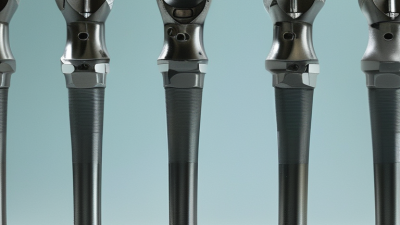
How to Choose the Best Knee Replacement Systems?

Choosing among Knee replacement systems is not a simple matter of comparing brand names. The right decision depends on anatomy, bone quality, activity level, surgical technique, and long-term clinical evidence. A design that performs well for one patient may feel unsuitable for another. Even small details matter, such as implant size, alignment options, bearing materials, and how naturally the knee bends.

Dr. Geoffrey Westrich, a recognized joint-replacement specialist, explains, “The goal of knee replacement is to relieve pain and restore function.” That goal should guide every evaluation. A surgeon should discuss expected mobility, possible limitations, implant survivorship, and recovery demands in clear language. Patients may also ask how often a system has been used, whether independent studies support it, and how the surgeon manages complications.

Marketing can sound convincing. Evidence matters more.

A responsible comparison also considers the patient’s daily reality. Walking on uneven ground, climbing stairs, kneeling in a garden, or returning to recreational sports can expose meaningful differences. However, no implant guarantees a perfect outcome. Surgery, rehabilitation, tissue balance, and patient health influence results just as much as the device itself. This is where many articles oversimplify the decision.

The best Knee replacement systems are not necessarily the newest or most expensive. They are systems supported by sound research, appropriate design, reliable manufacturing, and a surgeon’s practical experience. Careful questions remain essential. The final choice should be shared, individualized, and realistic.
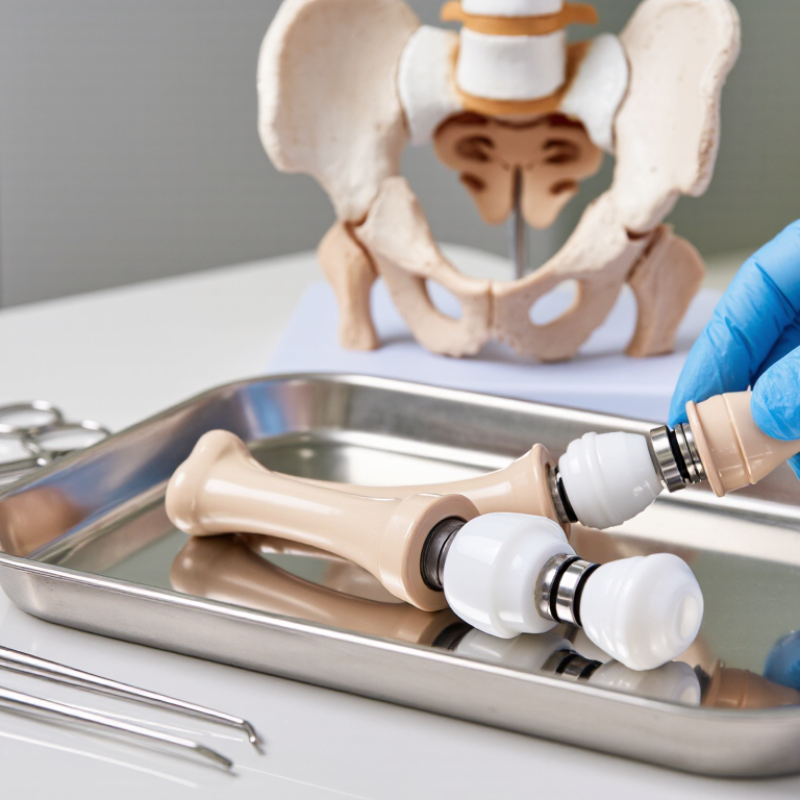
How to Choose the Best Knee Replacement Systems?

Define Clinical Need: AAOS Estimates ~790,000 U.S. TKAs Annually

How to Choose the Best Knee Replacement Systems?

The American Academy of Orthopaedic Surgeons estimates nearly 790,000 total knee arthroplasties occur annually in the United States. This figure defines a substantial clinical need, not an automatic reason for surgery. Patients may present with severe osteoarthritis, deformity, stiffness, or pain that limits walking. Each condition requires a different discussion.

The American Joint Replacement Registry’s annual reports show continuing growth in monitored knee replacement procedures and emphasize the value of outcome tracking. Read the data carefully. High procedure volume does not prove that one system is best. A suitable system should match bone quality, alignment goals, ligament stability, activity level, and the surgeon’s measured technique. Implant constraint matters. Fixation choice matters too.

Look beyond marketing claims. Review survivorship evidence, revision rates, registry findings, and independently published clinical studies. Ask whether the evidence follows patients for ten years or only reports early recovery. That difference is important. The 2023 National Joint Registry report from England and Wales also demonstrates why long-term surveillance can reveal performance differences that short studies miss.

Patient experience still belongs in the decision. A patient who struggles to climb stairs may value stability and predictable motion more than rapid discharge. Another may need careful planning for weak bone or previous surgery. No system fits everyone. Even experienced teams can misjudge expectations, alignment, or rehabilitation barriers. That is why clinical judgment should remain central, supported by transparent data and honest conversations.

Compare Implant Designs Using NJR Ten-Year Revision and Survivorship Data

How to Choose the Best Knee Replacement Systems?

Choosing a knee replacement system starts with registry evidence, not a brochure. The UK National Joint Registry’s 21st Annual Report reports roughly 96% ten-year survivorship across several major primary knee replacement categories. That means about four revisions per 100 cases by year ten. However, results vary with fixation method, bearing design, patient age, diagnosis, and follow-up quality.

Compare cemented, uncemented, and hybrid fixation within similar patient groups. Do not treat one percentage as universal. The NJR data can reveal meaningful differences, but registry studies are observational. Patient selection may influence the result. The Australian Orthopaedic Association National Joint Replacement Registry’s 2024 report also places many contemporary total knee systems in the mid-90% ten-year survival range.

Small differences matter.

A practical review should examine revision curves, not only headline survival. Check whether revisions involve loosening, infection, instability, or wear. These failure patterns can change the preferred design. A younger, highly active patient may need a different discussion from an older patient with severe deformity. Surgical technique matters too, sometimes more than expected. I would also question figures based on short follow-up or small samples. Ten-year data are useful, but they are not a guarantee for one individual.

Sources: National Joint Registry, 21st Annual Report, 2024; AOANJRR, Annual Report, 2024.

Match Constraint, Alignment, and Fixation to Patient-Specific Anatomy

How to Choose the Best Knee Replacement Systems?

Match constraint, alignment, and fixation to patient-specific anatomy. A successful choice begins with the knee in front of you, not a catalog. Examine ligament balance, bone loss, deformity, range of motion, and activity demands. Ligaments matter. If the posterior cruciate ligament functions reliably, a cruciate-retaining design may preserve more native movement. If it is deficient, a posterior-stabilized or more constrained option can provide controlled stability. Severe collateral weakness may require higher constraint, but unnecessary constraint can increase stress at the bone-implant interface.

Alignment also deserves careful judgment. Mechanical alignment remains reproducible, while kinematic or functional alignment may better respect a patient’s preoperative anatomy. Current evidence is still developing, and individual anatomy can expose weaknesses in any single philosophy. The American Joint Replacement Registry’s 2023 Annual Report reviewed more than 2.8 million hip and knee procedures, showing the value of large-scale outcome surveillance. Yet registry averages cannot replace ligament testing, full-length imaging, and intraoperative assessment.

Fixation should reflect bone quality, age, activity, and surgeon experience. Cemented fixation may offer dependable initial stability in softer bone. Cementless fixation can suit selected patients with strong bone and favorable loading conditions. Bone quality matters. I sometimes see alignment receive more attention than fixation planning, although early stability can influence recovery and later revision risk. Patient-specific templating helps, but it remains an estimate, not a promise. The final system should match anatomy, constraint needs, and realistic rehabilitation goals.

How to Choose the Best Knee Replacement Systems?

Match Constraint, Alignment, and Fixation to Patient-Specific Anatomy

Common planning references include neutral mechanical hip–knee–ankle alignment within approximately ±3°, a posterior tibial slope of about 3–7°, and approximately 3° of femoral component external rotation. These values are starting points rather than universal prescriptions. Implant constraint and fixation should be selected after evaluating ligament stability, bone quality, deformity, bone defects, and the patient’s native anatomy.

Reference ranges are commonly used surgical planning targets and should be interpreted with patient-specific imaging, soft-tissue assessment, and current clinical evidence.

Evaluate AJRR PROMs, Complication Rates, and Real-World Revision Trends

Choosing the best knee replacement system requires more than comparing implant designs or surgical brochures. AJRR PROMs offer a patient-centered view of recovery. They track pain, mobility, and daily function before and after surgery. Look for meaningful improvement, not only high satisfaction percentages. A patient walking farther at six months may matter more than a small statistical difference. Timing matters too. PROMs collected at different intervals can distort comparisons.

Complication rates need careful reading. Check infection, blood clots, stiffness, instability, and readmission figures separately. A single “overall complication rate” can hide important details. Ask whether the data are risk-adjusted for age, weight, activity level, and medical conditions. Also examine the denominator. A rate based on 200 cases should not carry the same confidence as one based on 20,000 procedures. Small samples can look impressive.

Real-world revision trends may reveal weaknesses that short trials miss. Review revisions at five, ten, and fifteen years when data are available. Pay attention to why revisions occurred, not merely how often. Loosening, wear, fracture, infection, and recurrent instability suggest different concerns. A low early revision rate is encouraging, but it is not proof of long-term durability. This is where judgment becomes imperfect. Registry data are powerful, yet follow-up gaps, changing surgical techniques, and inconsistent reporting can still influence conclusions.

How to Choose the Best Knee Replacement Systems? - Evaluate AJRR PROMs, Complication Rates, and Real-World Revision Trends

Evaluation Dimension Real-World Reference Data What to Examine Selection Implication Evidence Base
PROM Instrument Coverage Common registry-based assessments include the KOOS-JR for knee-specific function and symptoms, together with a general health measure such as the VR-12. Whether preoperative and postoperative scores are collected using the same validated instrument and time points. Prefer systems supported by consistent, risk-adjusted PROM collection rather than isolated patient testimonials. American Joint Replacement Registry (AJRR) PROM reporting methodology; AAOS PROM standards.
Patient-Reported Functional Improvement Large observational studies of primary total knee arthroplasty generally report substantial improvement in knee-specific pain and function during the first postoperative year. Mean change from baseline, percentage achieving a meaningful improvement, and the proportion reaching acceptable symptom states. Compare adjusted improvement within the same patient population; raw postoperative scores can be misleading. Peer-reviewed total knee arthroplasty PROM cohort studies; AJRR PROM analyses.
PROM Completion and Follow-Up PROM results are most useful when baseline and follow-up completion are high and follow-up timing is standardized, commonly around 1 year after surgery. Baseline completion, follow-up completion, missing-data rate, and whether nonresponders are analyzed for bias. Do not rank systems using PROM averages without checking response rates and loss to follow-up. Registry methodology guidance and observational PROM research.
Aseptic Revision Risk Contemporary registry studies commonly report approximately 95% or higher revision-free survival at 10 years for primary total knee arthroplasty, although results vary by patient risk, implant design, fixation, and follow-up completeness. Revision for loosening, instability, wear, stiffness, fracture, malalignment, or unexplained pain. Evaluate cumulative revision incidence using Kaplan–Meier or competing-risk methods, not only annual percentages. National joint replacement registry reports and long-term arthroplasty cohort studies.
Periprosthetic Joint Infection Deep infection after primary total knee arthroplasty is generally reported in the approximate range of 1%–2%, with rates influenced by patient comorbidity, obesity, diabetes, wound complications, and institutional protocols. Superficial and deep infection definitions, readmissions, debridement procedures, staged revision, and infection-related mortality. Use standardized infection definitions and separate early postoperative infection from late hematogenous infection. International Consensus Meeting criteria; registry and systematic-review evidence.
90-Day Readmission Published contemporary cohorts commonly report approximately 3%–5% unplanned readmission within 90 days after primary total knee arthroplasty, with variation by case mix and discharge pathway. All-cause readmission, emergency visits, thromboembolism, infection, cardiopulmonary events, and wound problems. Compare risk-adjusted rates and ensure observation status and transfers are counted consistently. Large administrative databases and contemporary arthroplasty outcome studies.
Venous Thromboembolism Symptomatic venous thromboembolism after modern primary knee replacement is generally reported below 1% in contemporary enhanced-recovery pathways, but estimates depend on prophylaxis and outcome surveillance. Deep-vein thrombosis, pulmonary embolism, prophylaxis protocol, duration, bleeding events, and readmission. Assess both thrombotic and bleeding outcomes rather than judging prophylaxis by one endpoint. Clinical practice guidelines and contemporary arthroplasty cohort studies.
Early Mortality Thirty-day mortality after elective primary total knee arthroplasty is typically well below 0.1% in large contemporary datasets, but risk rises with advanced age, frailty, and major comorbidity. 30-day and 90-day mortality, cardiopulmonary complications, and risk-adjustment variables. Use mortality mainly as a system-level safety indicator; differences between well-performing centers may be small. National administrative datasets and arthroplasty safety studies.
Long-Term Revision Trend Registry evidence indicates that revision risk accumulates over time. Younger and more physically active patients generally have greater lifetime revision risk because of longer implant exposure and higher activity demands. 5-, 10-, 15-, and 20-year revision-free survival by age, sex, diagnosis, fixation method, and primary versus revision procedure. Prefer long-term registry follow-up over short-term claims of durability. National joint replacement registries and long-term population-based studies.
Reasons for Revision Common revision indications include infection, instability, aseptic loosening, periprosthetic fracture, stiffness, polyethylene wear, and unexplained pain. The relative ranking varies by follow-up duration and registry. Primary diagnosis for revision, time from index surgery, single-stage versus staged treatment, and re-revision frequency. A low overall revision rate should not conceal a high rate of a specific preventable complication. AJRR and other national registry revision-indication reports.
Risk Adjustment and Case Mix PROMs and complication rates are affected by age, sex, body mass index, diabetes, smoking, inflammatory arthritis, prior surgery, baseline function, and socioeconomic factors. Adjusted versus unadjusted results, confidence intervals, sample size, follow-up duration, and missing-data handling. Only compare outcomes after confirming that patient populations and definitions are sufficiently similar. Registry risk-adjustment frameworks and peer-reviewed comparative-effectiveness studies.
Decision Threshold No single PROM, complication rate, or revision percentage can determine the best system for every patient. Balance meaningful symptom improvement, survivorship, complication profile, surgeon experience, patient anatomy, activity goals, and rehabilitation support. Choose the option supported by transparent, risk-adjusted, long-term evidence and appropriate clinical judgment. Evidence-based arthroplasty decision-making principles.
Data interpretation note: The numerical values shown are broad ranges reported across contemporary registry and peer-reviewed population studies, not performance claims for any specific company, brand, implant, hospital, or surgeon. Actual outcomes vary according to patient risk, surgical technique, follow-up duration, outcome definitions, and data completeness.
Recommended evidence sources: American Joint Replacement Registry annual reports, national joint replacement registries, AAOS patient-reported outcome guidance, International Consensus Meeting infection criteria, and peer-reviewed long-term total knee arthroplasty studies.

Verify FDA Clearance, Instrument Compatibility, and Surgeon Training Requirements

Choosing a knee replacement system starts with evidence, not reputation. Check the exact model in the FDA 510(k) database or approval records. Confirm the cleared indication, materials, fixation method, and component combinations. A cleared implant is not automatically suitable for every patient. FDA clearance also does not guarantee superior long-term performance. That distinction is easy to miss.

Instrument compatibility deserves equal attention. Ask whether the trays support the planned surgical technique and available navigation equipment. Verify sizes, sterilization instructions, loaner-tray delivery, and backup instruments. The 2024 American Joint Replacement Registry Annual Report analyzes more than three million hip and knee procedures. Its data show why implant selection should be reviewed alongside patient factors, surgical setting, and follow-up quality. Small workflow failures can create large delays.

Surgeon training is another practical safeguard. Request documented training for the specific system, including saw-block positioning, balancing steps, and revision planning. Training should match the instruments used in the operating room. The National Joint Registry’s 21st Annual Report shows that revision outcomes vary with patient age, fixation, and implant characteristics. However, registry data cannot replace case-specific judgment. I would still question any system supported mainly by sales demonstrations. A checklist helps, but it is not perfect. 马会

Zer0 Product Recalls

Why Shalby MedTech

We are committed to deliver solutions and transforming the way joint replacement procedures are performed.

Reliability
Integrity
Teamwork