How to Choose the Best Red Light Therapy Pod?
Choosing a Red Light Therapy Pod requires more than comparing glossy interiors, session timers, and dramatic before-and-after images. The technology is usually discussed under photobiomodulation, where light exposure may influence cellular activity. However, results depend on wavelength, irradiance, treatment distance, session duration, and individual health factors. The 2023 World Association for Photobiomodulation Therapy recommendations emphasize reporting these technical details clearly. Many product pages still omit them. That is a serious weakness.
Market interest is growing. The Global Wellness Institute’s 2024 Global Wellness Economy Monitor valued the worldwide wellness economy at approximately $6.3 trillion in 2023. Yet wellness spending does not prove clinical effectiveness. A larger market can still contain poorly tested devices. Buyers should examine independent measurements, electrical safety documentation, warranty terms, cleaning procedures, and realistic treatment claims. A warm cabin feels persuasive. It is not evidence.
Michael R. Hamblin, PhD, a leading photobiomodulation researcher, has described the principle simply: “Photobiomodulation is the use of light to stimulate healing.” His work also highlights the importance of dosage and biological context. That distinction matters when choosing a Red Light Therapy Pod for home, clinic, or fitness use. Compare the actual wavelengths, delivered power, coverage, and eye-protection guidance. Ask whether the manufacturer provides laboratory testing rather than marketing language. No device suits everyone. Photosensitivity, medication use, skin conditions, and pregnancy may require professional advice. This guide will separate measurable specifications from attractive promises, while acknowledging an uncomfortable point: evidence for specific full-body pod designs remains less standardized than many advertisements suggest.
Understanding How Red Light Therapy Pods Work
How to Choose the Best Red Light Therapy Pod?
Understanding how a red light therapy pod works starts with wavelength, dose, and exposure distance. Red light commonly ranges from 620 to 700 nanometers, while near-infrared light extends roughly from 700 to 1,100 nanometers. These wavelengths can reach different tissue depths. The World Association for Photobiomodulation Therapy publishes treatment guidance using irradiance and fluence, not brightness alone. A typical protocol may use 5–50 mW/cm² and several joules per square centimeter.
That detail matters. A pod can look intensely bright but deliver an unsuitable dose. Photons interact with cellular chromophores, especially in mitochondria, and may influence ATP production and local signaling. However, the response follows a possible biphasic pattern: too little may do little, while too much may reduce the intended effect. The 2023 evidence review in Photobiomodulation, Photomedicine, and Laser Surgery also noted inconsistent protocols across clinical studies. The evidence is promising, not perfect.
I measure the distance.
When comparing pods, check wavelength accuracy, irradiance at the body surface, session timing, ventilation, eye protection, and independent testing. A 2024 market analysis by Grand View Research reported continued growth in photobiomodulation demand, but market growth does not prove clinical effectiveness. I would also question vague claims such as “maximum cellular power.” Real treatment is less dramatic: a warm panel, a fixed timer, and repeated sessions. Professional guidance should shape expectations, not replace medical advice.
Identifying Your Personal Therapy Goals and Needs
Choosing a red light therapy pod starts with your personal goal, not its size or futuristic appearance. Are you targeting skin texture, temporary muscle comfort, or post-exercise recovery? These goals may require different wavelengths, treatment times, and energy levels. Clinical photobiomodulation studies commonly examine red light around 630–660 nanometers and near-infrared light around 810–850 nanometers. Reported protocols often use approximately 4–10 J/cm², but higher output is not automatically better.
Define your need precisely. For facial concerns, check whether the pod provides even coverage and protects the eyes. For larger muscle groups, internal dimensions and consistent irradiance matter more than decorative features. Ask for measured irradiance in mW/cm², treatment distance, wavelength accuracy, and independent safety testing. A 2023 systematic review in the Journal of Cosmetic Dermatology found positive trends across multiple photobiomodulation studies, but researchers also noted differences in devices and study methods. Evidence remains uneven.
Be skeptical of dramatic claims. The Global Wellness Institute valued the wellness economy at about 6.3 trillion dollars in 2023, showing how quickly this market is expanding. That figure reflects spending, not proven treatment outcomes. I would record baseline photographs, session length, skin reactions, and comfort levels. Small details matter. A pod can feel impressive yet deliver inconsistent exposure. People using photosensitizing medication, or managing eye conditions, should ask a qualified healthcare professional before treatment. My own choice would remain provisional, because long-term evidence and personal response can differ.
Comparing Pod Features, Light Specifications, and Coverage
Choosing a red light therapy pod requires more than comparing appearance or advertised power. I would examine the light spectrum first. Many devices use red and near-infrared wavelengths, commonly measured in nanometers. Red light may target surface tissue, while near-infrared light can reach deeper areas. Ask for verified wavelength data, not vague claims.
I would also compare irradiance, measured in milliwatts per square centimeter, and treatment time. Higher output is not automatically better. Excessive exposure may cause discomfort, while weak output may require longer sessions. Look for independent testing, clear safety instructions, eye protection guidance, and a timer. A pod with adjustable intensity can suit different comfort levels. Small details matter.
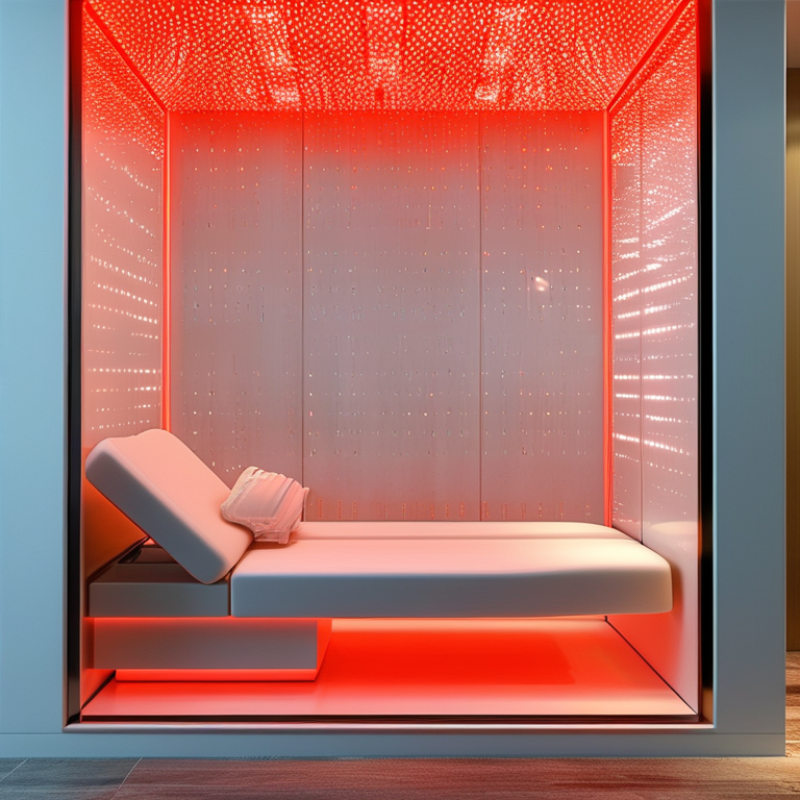
Coverage separates a full pod from a small panel. A well-designed pod should illuminate the front, sides, and back with limited repositioning. Check the interior dimensions, light spacing, and whether your body remains evenly positioned. Uneven coverage can leave noticeable gaps, especially around the shoulders and legs.
No pod is perfect. Reflective interiors may improve consistency, but they do not replace measured output. I would record skin comfort, session length, and visible changes over several weeks instead of trusting one impressive photograph. Results vary, and claims deserve careful questioning. People with photosensitivity or medical conditions should seek professional advice before use.
Evaluating Safety Standards, Comfort, and Ease of Use
Choosing the best red light therapy pod requires more than comparing light output. Safety should guide the decision. Look for documented electrical testing, stable wiring, protective eye equipment, and an automatic session timer. A clearly marked emergency shutoff matters. So does proper ventilation. A pod that becomes unusually hot may create discomfort and unnecessary risk.
Comfort affects whether you will use the pod consistently. Check the interior space, surface padding, and entry height before purchasing. You should be able to lie naturally without pressing against panels. Smooth, cleanable materials support better hygiene between sessions. Listen for the fan, too. A loud motor can make a short session feel surprisingly long. Temperature controls are helpful, but I would not assume every cooling system works equally well.
Ease of use often reveals the product’s real quality. Controls should be readable, simple, and reachable from inside. Clear session guidance is more trustworthy than impressive technical language. Keep records of session length and skin reactions, especially during early use. People taking photosensitizing medication or managing light-sensitive conditions should ask a qualified healthcare professional first. Individual tolerance varies. I once assumed stronger settings meant faster results; that assumption was careless. A safer approach is gradual use, careful observation, and regular inspection of cables, hinges, and surfaces.
Use this 100-point evaluation framework when comparing red light therapy pods. Safety receives the highest weighting because buyers should verify electrical safety, photobiological safety, wavelength and dose information, eye protection guidance, and thermal controls. Comfort and ease of use cover fit, heat management, session controls, cleaning, and access.
Choosing the Right Pod for Your Budget and Space
How to Choose the Best Red Light Therapy Pod?
Choosing the Right Pod for Your Budget and Space
A red light therapy pod should fit your room before it fits your routine. Measure ceiling height, doorway width, and storage space carefully. Some full-body models need permanent floor space, while compact units can fold away after use. A crowded room may make regular sessions inconvenient. That matters more than impressive specifications.
Budget involves more than the purchase price. Check the pod’s light wavelengths, irradiance information, warranty, ventilation, and electrical requirements. Reliable technical details should be clearly provided, not hidden behind vague claims. A lower-cost model may work well for targeted areas, but it may provide less coverage. Higher-priced designs often improve comfort, session space, and adjustability. Those features are useful, though not essential for everyone. Be realistic.
Tips:
Sketch the pod’s footprint with masking tape before buying. Sit or lie inside the marked area for several minutes. Check whether the control panel is easy to reach. Compare return policies and safety instructions. Avoid choosing based only on appearance or discount pricing.
Red light therapy is not a universal treatment. People using photosensitizing medication or managing a medical condition should seek professional advice first. Eye protection may also be appropriate, depending on the device instructions. A pod that encourages consistent, comfortable use can be more valuable than a larger model used rarely. Convenience wins sometimes.




 Reliability
 Integrity
 Teamwork
 Looking for the
  Register as