10 Tips for Buying Knee Replacement Systems

Choosing among Knee replacement systems is a clinical and procurement decision, not a simple equipment purchase. Hospitals must examine implant design, surgical instruments, material quality, clinical evidence, and long-term support. A polished brochure cannot replace independent evaluation.

Orthopedic surgeon Dr. Steven Haas puts the central aim plainly: “The goal of knee replacement is to relieve pain and restore function.” That principle should guide every purchasing discussion. A system may offer robotic compatibility, customized sizing, or advanced surface technology. However, those features matter only when they support reliable patient outcomes. Surgeons should compare published survivorship data, revision rates, alignment results, and complications across patient groups. Look closely.

Procurement teams also need practical details. Can the instruments fit existing operating rooms? How quickly can replacement trays arrive? Does the manufacturer provide surgeon training, sterile-processing guidance, and responsive technical support? These questions often reveal weaknesses that product demonstrations hide.

The ten tips in this guide focus on evidence, usability, safety, total cost, and patient needs. They encourage careful conversations among orthopedic surgeons, nurses, biomedical engineers, finance teams, and patients. No system is perfect. Even strong evidence has limits, especially when studies involve small samples or short follow-up periods. Buyers should admit uncertainty, document assumptions, and revisit decisions as new data appears. The best choice is rarely the newest device. It is the system that fits the surgical team, the hospital, and the people expected to live with its results.

10 Tips for Buying Knee Replacement Systems

Define the Knee Replacement System and Its Main Components

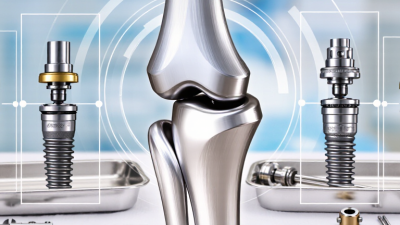
A knee replacement system is a coordinated set of implants that replaces damaged joint surfaces. It is not a single device. The femoral component covers the lower end of the thighbone, while the tibial tray rests on the upper shinbone. Between them, a polyethylene insert supports smooth movement and helps control stability. A patellar component may resurface the underside of the kneecap, depending on the patient’s condition and the surgeon’s plan.

Each component has a specific job. The femoral and tibial parts are usually made from strong, biocompatible metal alloys. The insert uses durable plastic designed to reduce friction and absorb load. Fixation may use bone cement, bone ingrowth, or a hybrid approach. Surgical instruments and trial components are also important, although they are not permanent implants. They help the team test alignment, balance, and knee motion during surgery. Small errors matter. A few degrees of imbalance can affect comfort, walking, or long-term wear. Imaging, bone quality, activity level, age, and ligament condition should guide system selection. No design suits every patient. The label can mislead. Even experienced teams may overlook how daily habits affect implant stress. Patients should ask about expected movement, fixation, material choices, recovery demands, and the evidence supporting each option. A qualified orthopedic team must confirm the final choice through examination, imaging, and shared decision-making.

Identify Patient Needs, Surgical Goals, and Implant Requirements

10 Tips for Buying Knee Replacement Systems

Identify Patient Needs, Surgical Goals, and Implant Requirements

A knee replacement decision should begin with the patient, not the catalog. Review age, activity level, pain patterns, deformity, bone quality, and medical history. Imaging should confirm the diagnosis and clarify alignment, bone loss, and ligament condition. Pain matters. So does function.

Surgical goals must be specific. A patient seeking stable walking may need different planning from an active patient expecting frequent stair use. Discuss fixation strategy, implant constraint, polyethylene options, component sizing, and compatibility with available instruments. The system should support accurate bone cuts and predictable alignment. It should also fit the surgeon’s training and operating workflow.

Reliability depends on evidence, manufacturing quality, traceability, and service support. Examine published clinical data, documented testing, sterilization controls, and instructions for use. Ask how revision needs, unusual anatomy, and intraoperative changes will be managed. Small details matter, including trial components, sizing increments, and backup instruments.

No checklist is perfect. Even careful planning can miss a patient’s fear, work demands, or limited home support. Revisit those issues before consent. A sound choice balances anatomy, goals, surgical technique, verified evidence, and realistic follow-up expectations.

10 Tips for Buying Knee Replacement Systems - Identify Patient Needs, Surgical Goals, and Implant Requirements

Tip Decision Dimension What to Assess Key Implant or System Requirements Practical Buying Considerations
1 Confirm the clinical indication Determine whether symptoms and imaging are consistent with end-stage osteoarthritis, inflammatory arthritis, post-traumatic arthritis, or another condition appropriate for total or partial knee replacement. A range of system options, including total knee and appropriately indicated unicompartmental solutions, with clearly defined indications and contraindications. Use a documented clinical assessment and radiographic evaluation rather than pain severity alone when selecting the procedure and system.
2 Match the system to patient anatomy Review bone size, femoral and tibial geometry, deformity, bone defects, and any previous surgery that may affect component positioning. Multiple component sizes, left and right configurations where applicable, appropriate sizing increments, and options for unusual anatomy or bone loss. Check sizing coverage using the supplier's verified measurement data and confirm that the available range fits the facility's patient population.
3 Define the surgical philosophy Identify whether surgeons primarily use mechanical alignment, kinematic alignment, restricted kinematic alignment, or another evidence-informed technique. Instrumentation, alignment guides, trial components, and planning tools that support the intended surgical workflow without forcing an incompatible technique. Evaluate the system during representative cases and confirm that the instruments are intuitive, reproducible, and compatible with the surgeon's training.
4 Evaluate implant fixation options Consider patient age, bone quality, activity level, fracture risk, and the surgeon's preference for cemented, cementless, or hybrid fixation. Validated fixation choices, suitable surface characteristics for cementless use when offered, and compatible cementing instruments when cemented fixation is selected. Review clinical evidence, regulatory documentation, and handling requirements. Avoid selecting fixation solely because it is marketed as newer or simpler.
5 Plan for ligament and constraint needs Assess the integrity of the posterior cruciate ligament and collateral ligaments, as well as instability, deformity, and the likelihood of revision complexity. A coherent family of designs with appropriate levels of constraint, compatible polyethylene inserts, and revision or augment options when clinically necessary. Ensure that the surgeon can move between planned constraint levels without requiring an entirely separate workflow or incompatible instrumentation.
6 Prioritize wear and material performance Consider expected activity, patient longevity, contact stresses, insert thickness, and the consequences of polyethylene wear over time. Biocompatible materials, documented manufacturing controls, appropriate conformity choices, and clear information about polyethylene properties and sterilization. Compare evidence from peer-reviewed studies and joint-replacement registries where available. Do not treat laboratory wear results as a guarantee of individual outcomes.
7 Assess instrumentation and workflow Measure setup time, tray count, instrument complexity, compatibility with operating-room processes, and the learning curve for the clinical team. Durable and clearly labeled instruments, efficient trays, reliable trialing tools, cleaning instructions, and a documented sterilization process. Run a workflow simulation or cadaveric evaluation before purchase. Include surgeons, nurses, sterile-processing staff, and operating-room managers in the review.
8 Verify planning and digital compatibility Determine whether the facility uses conventional templating, digital planning, patient-specific guides, navigation, or robotic assistance. Validated compatibility with the selected planning or assistance platform, dependable data transfer, and clearly defined responsibility for software and instrument support. Confirm that the system can be used safely if digital equipment is unavailable. Review cybersecurity, software updates, training, and contingency procedures.
9 Review safety, quality, and evidence Examine regulatory clearance or approval in the target market, adverse-event history, recalls, complaint handling, and published clinical evidence. Traceable lot information, quality-system documentation, instructions for use, contraindications, implant compatibility information, and post-market surveillance processes. Request current documentation from the supplier and involve the hospital's quality, regulatory, and infection-prevention teams before approval.
10 Calculate total value and service support Compare purchase price with instrument management, inventory, training, operating time, revision support, logistics, and expected wastage. Transparent pricing, dependable supply continuity, size availability, responsive technical support, surgeon education, and a defined replacement or recall process. Use a multi-year total-cost model and include outcome measures such as complications, readmissions, revision rates, operating-room time, and patient-reported recovery.

Note: Final system selection should be based on patient-specific clinical judgment, applicable regulatory requirements, current evidence, and the operating team's validated experience.

Compare Implant Materials, Designs, Sizes, and Compatibility

Tip 1: Check the implant material, such as cobalt-chrome, titanium, oxidized zirconium, or highly cross-linked polyethylene. Each has different wear, strength, and allergy considerations.

Tip 2: Ask how the design manages stability, rotation, and bone preservation.

Tip 3: Match the implant size to measured anatomy, not simply height or weight. Small errors can affect alignment, comfort, and soft-tissue tension.

Tip 4: Confirm compatibility between the femoral component, tibial tray, polyethylene insert, and patellar component. Components should belong to a validated system; mixing parts without documented compatibility is unsafe.

Tip 5: Review fixation options, including cemented, cementless, or hybrid approaches.

Tip 6: Request evidence from registries, not only laboratory testing. The American Joint Replacement Registry’s 2023 Annual Report contains data from more than 2.5 million hip and knee procedures, supporting more meaningful revision-rate comparisons.

Tip 7: Examine the UK National Joint Registry’s 21st Annual Report for longer-term performance patterns. Registry data is useful, but it can still reflect patient selection and surgical technique.

Tip 8: Compare available sizes and offsets before surgery.

Tip 9: Check instrument compatibility, imaging requirements, and future revision planning.

Tip 10: Discuss metal sensitivity, bone quality, activity level, and expectations with the treating surgeon.

There is no perfect material. I would be cautious about choosing a design because it sounds newer; long-term evidence may be incomplete. A practical comparison should record exact component names, sizes, materials, fixation method, and documented clinical outcomes.

Assess Manufacturer Quality, Clinical Evidence, and Regulatory Approval

10 Tips for Buying Knee Replacement Systems

Tip 1: Verify the manufacturer’s quality system before reviewing price. Inspect ISO 13485 certification, audit findings, complaint trends, and corrective actions.

Tip 2: Request lot-level traceability, sterilization records, and supplier controls.

Tip 3: Examine surgeon training and technical support. In practice, small packaging errors can delay surgery.

Tip 4: Separate marketing claims from clinical evidence. Ask for peer-reviewed studies, registry results, and follow-up beyond two years.

Tip 5: Prefer evidence matching the intended patient group, surgical technique, and implant design.

Tip 6: Review revision outcomes, not only early pain scores. The American Joint Replacement Registry’s 2023 Annual Report analyzed more than 2.4 million procedures, showing why large registry data can reveal performance patterns that single-center studies may miss.

Tip 7: Check whether results are independently reproduced. No dossier is perfect.

Tip 8: Confirm regulatory approval in the purchasing market. Review the exact model, components, indications, and approved labeling, rather than accepting a family-level certificate.

Tip 9: For United States procurement, verify the relevant FDA clearance or approval pathway. For European procurement, check valid MDR conformity documentation and post-market surveillance obligations.

Tip 10: Compare safety alerts, field actions, and regulator databases before contracting. The FDA’s MAUDE database can identify reported events, but reports do not prove causation. Ask an orthopedic specialist and a regulatory professional to review the evidence together.

Review Costs, Hospital Support, Warranties, and Long-Term Care

10 Tips for Buying Knee Replacement Systems

Buying a knee replacement system requires more than comparing the implant price. Ask for an itemized estimate covering the device, surgeon, anesthesia, hospital stay, imaging, and rehabilitation. Costs can change when complications occur, so request written details about deductibles and revision surgery. A cheaper option may create higher expenses later.

Hospital support matters during recovery. Check whether the facility provides trained orthopedic nurses, physical therapists, and clear discharge instructions. Ask how quickly staff respond to swelling, fever, wound drainage, or sudden pain. Confirm where follow-up visits occur and whether emergency advice is available after hours. Small gaps in communication can become stressful.

Read warranty documents carefully. Some warranties may cover manufacturing defects but exclude damage from falls, infection, or unusual loading. Ask who handles a claim and whether removal or replacement costs are included. Long-term care also deserves attention. A qualified surgeon should explain expected implant life, activity limits, weight management, and monitoring appointments. Keep copies of surgical records and imaging. I once focused too heavily on the initial quote; that was a mistake. The cheapest estimate did not include rehabilitation sessions or transportation. Patient outcomes vary, and no system guarantees a pain-free result. Get an independent medical opinion when the recommendation feels rushed.

Zer0 Product Recalls

Why Shalby MedTech

We are committed to deliver solutions and transforming the way joint replacement procedures are performed.

Reliability
Integrity
Teamwork