Choosing the right Hip replacement patient support products can make ordinary recovery tasks safer and less tiring. A raised toilet seat changes the angle of a difficult sit. A reacher can bring socks or a dropped phone within range. A stable walker may help someone cross a hallway without grabbing furniture. Small details matter.
Orthopedic surgeon Dr. Howard Luks is associated with the reminder, “Motion is lotion.” It is a useful prompt, not a reason to push through pain or ignore a care plan. After surgery, suitable supports depend on the procedure, home layout, balance, and clinician instructions. A product that helps one patient may feel awkward or unsafe to another. That part is easy to overlook.
This 2026 guide explores practical options, including walkers, crutches, sock aids, long-handled shoehorns, shower chairs, and grab bars. It considers what each item can help with, what limitations to expect, and which features deserve a closer look. For example, a shower chair needs a secure fit, while a walker should suit the user’s height and walking pattern. No product works for everyone. Ask the surgeon or physical therapist before changing mobility aids or adding equipment, especially when weight-bearing instructions apply. A thoughtful setup can reduce strain; it cannot replace individualized medical guidance.
Defining hip-replacement support products starts with the care setting. AHRQ’s Healthcare Cost and Utilization Project recorded 608,000 U.S. inpatient hip-replacement procedures in 2019. This is an inpatient count, not a measure of every replacement or each patient’s needs. (AHRQ, HCUP National Inpatient Sample, 2019.)
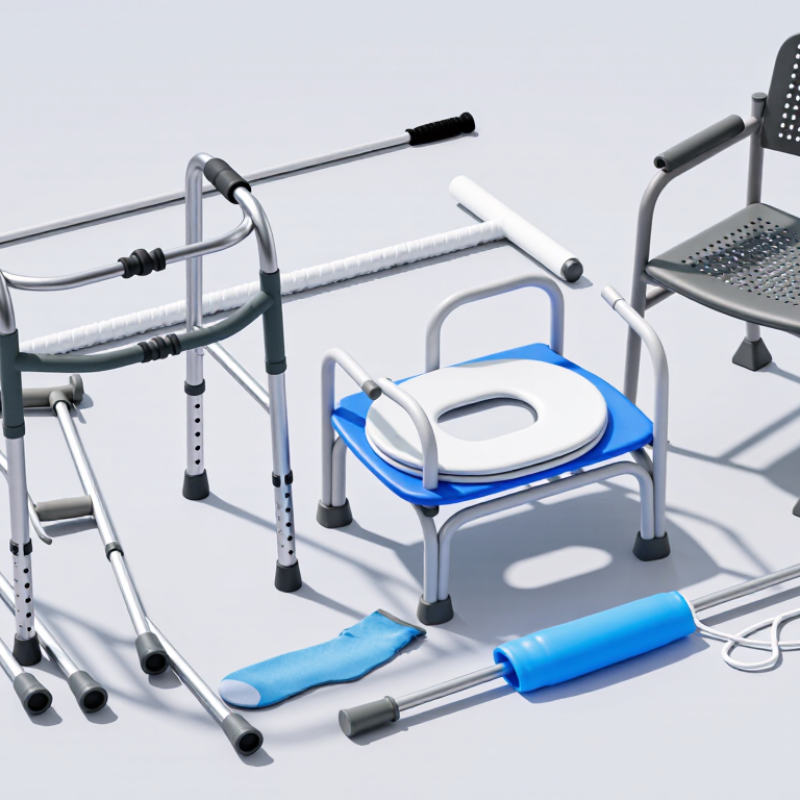
Support products are practical aids used during recovery: a front-wheeled walker, raised toilet seat, shower chair, reacher, or long-handled shoehorn. They can make standing, bathing, and dressing easier as mobility changes.
But they are not interchangeable. A shower chair that suits one home may not fit another’s narrow tub. The procedure count is substantial, yet it cannot show how many patients need each item. That distinction is easy to miss—and worth revisiting.
Tips: Before discharge, ask the care team to check walker fit and practice transfers using the actual bed and bathroom setup. Measure tight doorways, and confirm which aids suit the patient’s movement precautions. Fit matters. Avoid buying a full kit by default; balance, home layout, and recovery plans differ. AHRQ’s figure measures inpatient procedures, not product demand.
After hip replacement, mobility aids turn an early walk into a safer, more manageable task. NICE guideline NG157 recommends helping patients mobilise within 24 hours, unless a medical or surgical reason prevents it. A correctly adjusted walker can steady the first steps; crutches may suit some patients, while a raised toilet seat and firm chair reduce deep bending. Small details matter. Clear the route, secure loose rugs, and keep a phone within reach.
The 24-hour goal is not a race. Pain, dizziness, blood pressure, and surgical instructions should guide each attempt with the care team. A systematic review by Guerra and colleagues in Clinical Rehabilitation (2015) found early mobilisation after hip or knee replacement was associated with a hospital stay about 1.8 days shorter (95% CI, 1.1–2.5 days). That is a group result, not a promise for every patient. A walker is useful, but it cannot replace supervision when balance feels uncertain. And a little awkwardness is normal; rushing to look independent can be the less safe choice.
Early, supervised movement is commonly included in enhanced recovery after surgery (ERAS) pathways. The appropriate aid and timing depend on the patient’s balance, strength, surgical instructions, and weight-bearing status; follow the treating care team’s guidance.
| Product | Typical role after hip replacement | When it may be useful | Safety and selection notes |
|---|---|---|---|
| Wheeled or standard walker | Provides a broad support base for standing and short-distance walking. | Often considered for initial supervised walking when extra balance support is needed. | A clinician or therapist should set the height and teach safe use. Use the type prescribed; check that tips or wheels are secure. |
| Crutches | Can assist walking while reducing load through a leg when instructed. | May suit patients who can use them safely and whose care plan calls for crutches. | Require adequate strength, balance, and training. Follow the prescribed weight-bearing instructions; do not switch aids without clinical advice. |
| Cane | Offers less support than a walker and may assist with balance during later recovery. | May be appropriate when a clinician or therapist determines that reduced support is safe. | Correct height and walking technique matter. A cane is not a substitute for a more supportive aid when balance is impaired. |
| Gait belt (caregiver or clinical use) | Can help a trained helper steady a patient during a transfer or short walk. | Useful when hands-on assistance has been recommended by the care team. | It is not a walking aid for independent use. A trained helper should apply it correctly and avoid areas affected by wounds, tubes, or medical devices. |
| Non-slip, well-fitting footwear | Supports stable footing during transfers and walking. | For standing and walking when permitted, including supervised early mobilization. | Choose secure footwear with a nonskid sole; avoid loose slippers or walking in socks on smooth floors. |
| Raised toilet seat or toilet safety frame | May make sitting down and standing up easier by changing seat height or adding hand support. | Consider if the toilet is low or transfers are difficult, particularly during early recovery. | Need varies by patient, home setup, and surgical instructions. Ensure the equipment is stable and correctly installed. |
| Shower chair or bench | Allows seated bathing and can reduce the need to stand for extended periods. | May help when balance, stamina, or safe shower transfers are concerns. | Confirm when showering is allowed and how to protect the incision. Use a stable chair with nonslip feet; follow transfer instructions. |
| Reacher or dressing aid | Helps retrieve light objects or manage clothing without bending as far. | Can be useful for dressing and everyday tasks when movement is restricted or uncomfortable. | Use only within the movement limits provided by the surgical team; avoid reaching for heavy or unstable items. |
| Leg lifter | A looped strap may help move the operated leg into or out of bed or a chair. | May assist when lifting the leg independently is difficult. | Ask a therapist to demonstrate use. It does not replace help with transfers when hands-on assistance is needed. |
Important: “Mobilize within 24 hours” generally refers to movement as directed by the clinical team, not unsupervised walking. Follow individualized weight-bearing, transfer, and movement precautions; needs differ by patient and procedure.
The CDC reports that about one in four adults aged 65 and older falls each year. After hip replacement, pain, weakness, and unfamiliar movement can make everyday routines feel less steady. The bathroom deserves extra attention. A raised toilet seat may reduce how far someone needs to bend, while securely installed grab bars offer support during transfers. Towel rails are not grab bars. They may pull loose under body weight.
A shower chair and handheld showerhead can make bathing less tiring, especially when standing is difficult. Keep the floor dry, remove loose rugs, and use a nonslip surface designed for the shower. Small details matter. A clear path from bed to bathroom, with a night-light and frequently used items within reach, can reduce rushed steps. It is easy to overlook a damp bathmat.
Dressing aids can also limit awkward bending. A sock aid, long-handled shoehorn, and dressing stick may help someone follow movement precautions set by their surgical team. Fit and technique vary, so ask a physical or occupational therapist to demonstrate safe use. No product eliminates fall risk, and some aids may not suit every home or stage of recovery. Check the setup with a clinician before relying on it.
After hip replacement, cold therapy and practical comfort supports can make the first days at home easier. They do not replace pain medicines, wound care, or movement plans. The ERAS Society’s 2019 consensus emphasizes multimodal pain control and early mobilization. NICE guideline NG157 sets a clear benchmark: help patients mobilize on the day of surgery, and no later than 24 hours afterward.
A cold pack wrapped in a thin towel may soothe a warm, swollen hip area. Evidence for cold therapy is mixed, so treat it as an aid, not a cure.
Small details matter. Keep a stable chair, clear walking routes, and a phone within reach. Use a raised seat or leg-positioning support only if your care team recommends it; hip precautions vary.
Cold packs can irritate skin, especially when sensation is reduced. Check the skin often, and follow your clinical team’s instructions for timing and placement.
Recovery is not perfectly linear. A difficult morning does not always mean a setback.
Tips: Set up the bedside before surgery: water, charger, prescribed medicines, and a firm pillow within reach. Ask a physiotherapist to check your walker height and practice safe transfers. Stop cold therapy if skin becomes numb, unusually pale, or painful, and contact your care team with concerns.
After hip replacement, support products should match the surgeon’s exact weight-bearing instructions. “As tolerated,” partial, and non-weight-bearing instructions are not interchangeable. Ask the surgical team or physical therapist which device fits your current plan. A walker may offer a broader base of support, while crutches can require more balance and upper-body strength. The right choice depends on your instructions and abilities.
Fit matters. With a walker, stand upright and let your arms hang naturally; the handles usually align near your wrist creases, allowing a slight bend in your elbows. A physical therapist should check the height and show you how to step without putting more weight on the operated leg than permitted. Small details count. Loose tips or a slippery floor can change how secure a device feels. Do not adjust to a new device alone.
At home, a raised toilet seat, shower chair, and reacher can reduce bending and twisting. Check that the chair sits firmly and that the bathroom floor is dry; a loose bath mat can become a hazard. These products support daily tasks, but they do not change weight-bearing limits. The fit may feel awkward at first. That is worth revisiting: ask your therapist to watch you use each item, especially if pain, fatigue, or balance changes. Follow the surgeon’s updated instructions as healing progresses.
We are committed to deliver solutions and transforming the way joint replacement procedures are performed.
Looking for the
Register as