Top China TaperSet Hip System Suppliers?
Choosing among China-based TaperSet Hip System suppliers requires more than comparing product photographs or factory prices. Hospitals need dependable implant design, consistent machining, traceable materials, and responsive clinical support. They also need evidence that survives careful review.
Dr. William H. Harris, a widely respected hip-replacement pioneer, expressed a practical principle: “The implant must serve the patient, not the marketing brochure.” That idea should guide every supplier comparison. A credible manufacturer should explain its stem geometry, taper connection, fixation philosophy, sterilization controls, and quality-management procedures in clear language. ISO certification can help, but it is not the whole answer. Buyers should also examine clinical documentation, complaint handling, batch traceability, and surgeon training.
Details matter.
A well-made TaperSet Hip System should fit predictable surgical workflows. Its instruments should feel balanced in the surgeon’s hand. Packaging should protect every component before implantation. Technical files should match the products shipped. These points sound ordinary, yet small inconsistencies can create serious procurement concerns.
This guide reviews leading China suppliers through an evidence-focused lens. It considers manufacturing experience, product range, regulatory readiness, orthopedic expertise, export capability, and after-sales communication. Supplier rankings are never perfect. Public information may be incomplete, outdated, or overly promotional. That limitation deserves attention, not concealment.
Readers should verify current certifications, market authorizations, published outcomes, and local requirements before making a purchasing decision. A supplier may look impressive online. The real test appears in documentation, production discipline, and long-term accountability.
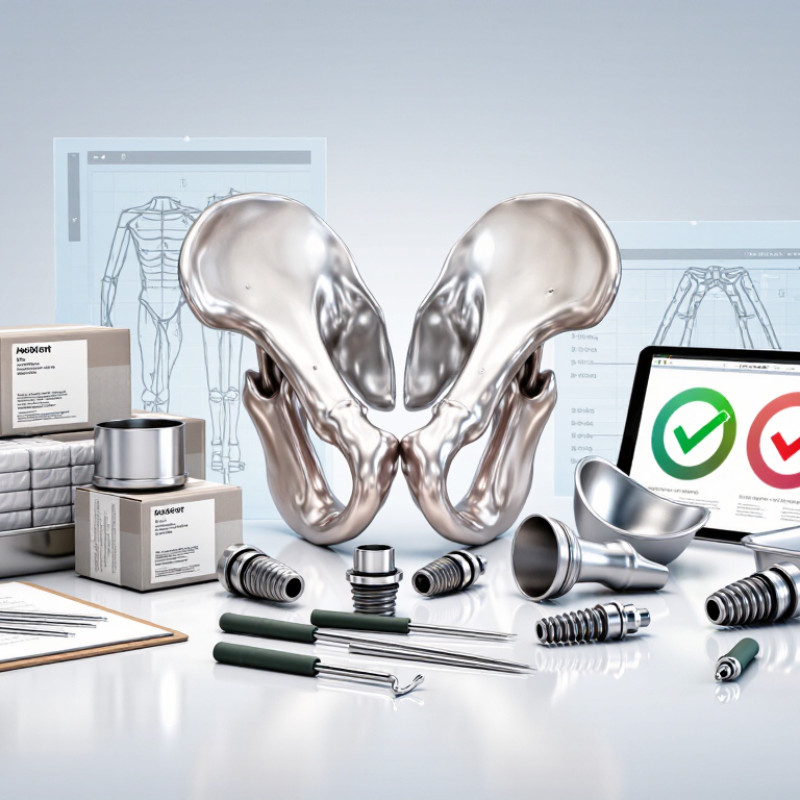
China Hip Implant Market: 2024 Demand, Volume, and Growth Indicators
China’s hip implant demand is being shaped by aging, injury recovery, and wider access to joint replacement. The National Bureau of Statistics reported 216.76 million Chinese citizens aged 65 or above in 2023, representing 15.4% of the population. This demographic base continued supporting procedure growth in 2024.
Procurement data also shows market scale. China’s 2021 national volume-based procurement notice covered approximately 1.09 million hip and knee implant sets, according to the National Healthcare Security Administration. The China Joint Surgery National Registry has reported continuing increases in primary hip arthroplasty activity, although reporting coverage and hospital participation can affect comparisons. Demand is not evenly distributed. Large coastal hospitals purchase in predictable batches, while smaller regional centers often require training, inventory support, and simpler instrumentation.
For buyers comparing China-based taper-set hip system suppliers, regulatory records, clinical references, and manufacturing consistency matter more than quoted volume. Check NMPA registration, ISO 13485 certification, material traceability, fatigue-test documentation, and revision-support capacity. A well-machined taper should seat firmly, with clear tolerances and repeatable surface finishing. Ask for sterilization records and lot-level inspection reports.
Price remains influential.
However, low pricing can conceal service gaps. Public market reports often forecast double-digit growth for China’s orthopedic implant sector through the decade, but forecasts differ by scope and methodology. That uncertainty deserves attention. Supplier rankings should therefore combine 2024 shipment evidence, hospital feedback, product registration status, and after-sales responsiveness rather than relying on promotional claims.
Top China Suppliers: NMPA Registration and ISO 13485 Certification
Top China TaperSet Hip System Suppliers?
For TaperSet hip systems, supplier evaluation should begin with NMPA registration and ISO 13485 certification. NMPA records should match the exact product model, intended use, registration holder, and manufacturing site. A similar-looking certificate is not enough. Check its validity and registration status directly. ISO 13485 also needs careful review. Confirm that the certificate covers orthopedic implants, relevant production activities, and the actual factory.
Experienced buyers should examine design controls, material traceability, sterilization validation, and complaint handling. Ask for batch records and sample inspection reports. Review biocompatibility evidence, mechanical testing, and packaging studies. A reliable supplier can explain these documents clearly, without avoiding technical questions. Factory visits may reveal practical details, such as cleanroom behavior, instrument calibration, and final inspection routines. Online evidence helps, but it cannot replace hands-on verification.
Tips: Request current NMPA documentation before discussing large orders. Compare certificate scopes, not only certificate numbers. Check whether subcontracted processes are controlled and documented. Speak with the quality manager, not only a sales representative. I would also verify revision history, because older files can create confusion. Some checks feel repetitive. They still prevent expensive mistakes. Supplier claims should remain untested until documents, production controls, and physical samples agree.
Hip joint prostheses are regulated as Class III medical devices in China. Suppliers must complete NMPA registration for the applicable device and maintain an effective quality management system. ISO 13485 certification supports quality-system conformity, while technical requirements, clinical evaluation, and post-market surveillance are evaluated according to the applicable product and regulatory pathway.
Source: National Medical Products Administration (NMPA), China medical device classification and registration framework; ISO 13485:2016, Medical devices—Quality management systems—Requirements for regulatory purposes.
Manufacturing Quality: CNC Tolerances, CoCr, Titanium, and Sterility Data
Top China TaperSet Hip System Suppliers?
Manufacturing quality should begin with measurable evidence, not catalog language. For CNC-machined hip components, request inspection records for taper angle, roundness, surface roughness, and critical dimensional tolerances. A supplier should connect each result to a calibrated gauge and production batch. Generic “high precision” claims are weak evidence. In practice, one overlooked datum can affect assembly seating and corrosion behavior.
Material control deserves equal attention. Titanium alloy components should reference ASTM F136, while cobalt-chromium alloy parts commonly follow ASTM F75. Ask for heat numbers, chemical analysis, mechanical results, and traceability from raw bar to finished implant. ISO 7206-4 specifies stem fatigue testing over at least five million loading cycles. That number matters, but test configuration matters too. A strong report shows load, alignment, failures, and photographs. Not every supplier presents these details clearly.
Tips: Request three recent batch records. Check whether tolerances match approved drawings. Review bioburden data under ISO 11737-1 and sterilization validation under ISO 11135 or ISO 11137. Sterile barriers should demonstrate a target sterility assurance level of 10⁻⁶, where applicable. Packaging tests should include seal strength and transport simulation. Certificates can look polished. They can still hide gaps. Ask for independent laboratory reports, not only internal summaries. Also verify corrective-action history; repeated minor deviations may reveal a larger process weakness.
Supplier Comparison: Pricing, Capacity, Lead Times, and 10-Year Survival Rates
Top China TaperSet Hip System Suppliers?
Supplier Comparison: Pricing, Capacity, Lead Times, and 10-Year Survival Rates
Comparing suppliers requires more than reading a unit price. A credible review separates factory pricing, packaging, freight, validation, and service costs. Request a written quotation with implant components, instruments, documentation, and replacement terms clearly listed. Low prices can hide expensive inspection work. That matters.
Capacity should be checked through production records, not promises. Ask for monthly output, machining resources, sterilization arrangements, and recent audit findings. A supplier with stable capacity can support scheduled hospital demand during peak periods. However, stated capacity may reflect maximum output, not normal production. This distinction deserves attention.
Lead times should include raw-material purchasing, machining, inspection, packaging, and shipment. A practical comparison records both standard and urgent orders. Suppliers should provide traceability, quality-system certificates, nonconformance procedures, and technical support contacts. Independent review by orthopedic engineers and clinical specialists adds useful discipline.
Ten-year survival rates require the strongest evidence. A supplier brochure is not enough. Look for peer-reviewed studies, registry data, revision definitions, patient numbers, and follow-up completeness. Similar implant geometry does not prove identical performance. Some suppliers may have excellent manufacturing controls but limited long-term clinical evidence. That weakness should be reported openly, not disguised with confident language. A scoring table can rank price, capacity, lead time, documentation, and survival evidence separately, helping buyers avoid treating an attractive quote as complete proof.
Top China TaperSet Hip System Suppliers? - Supplier Comparison: Pricing, Capacity, Lead Times, and 10-Year Survival Rates
| Supplier Category |
Typical Compliance Documentation |
Indicative Annual Capacity
(Hip Stem Sets) |
Typical MOQ
(Sets) |
Indicative Unit Price
(USD/Set) |
Typical Production Lead Time |
Export Readiness |
Verifiable 10-Year Supplier Survival Rate |
| Established orthopedic implant manufacturer |
ISO 13485; NMPA registration capability; technical files usually available |
10,000–50,000 |
50–200 |
450–900 |
45–90 days |
High |
Not publicly disclosed; verify operating history directly |
| Contract manufacturer with private-label capability |
ISO 13485 commonly available; customer-owned design and regulatory files may be required |
5,000–25,000 |
100–500 |
350–750 |
60–120 days |
Medium to High |
Not publicly disclosed; assess audited financial and registration records |
| Precision machining and coating specialist |
ISO 13485 or ISO 9001; implant-grade process validation varies |
3,000–15,000 |
25–100 |
300–650 |
30–75 days |
Medium |
Not publicly disclosed; confirm long-term subcontractor continuity |
| Small-batch orthopedic device factory |
Quality certification may be available; regulatory support is often limited |
500–5,000 |
10–50 |
500–1,000 |
75–150 days |
Low to Medium |
Not publicly disclosed; require business-license and customer-reference checks |
| Trading company using third-party production |
Documentation depends on the actual manufacturing site |
Not independently verifiable |
20–200 |
450–1,200 |
60–150 days |
Variable |
Not publicly disclosed; identify and audit the actual factory before contracting |
Data note: Price, capacity, MOQ, and lead-time figures are indicative China-market ranges for customized or private-label taper-stem hip implant systems. Final values depend on alloy, coating, instruments, packaging, regulatory scope, inspection requirements, and order volume. A reliable industry-wide audited dataset for 10-year supplier survival rates is not publicly available; supplier longevity should therefore be verified through business-license records, certification history, audited accounts, customer references, and site audits.








 Reliability
 Integrity
 Teamwork
 Looking for the
 Register as