Top 10 Benefits of In-house Manufacturing Excellence for Buyers?

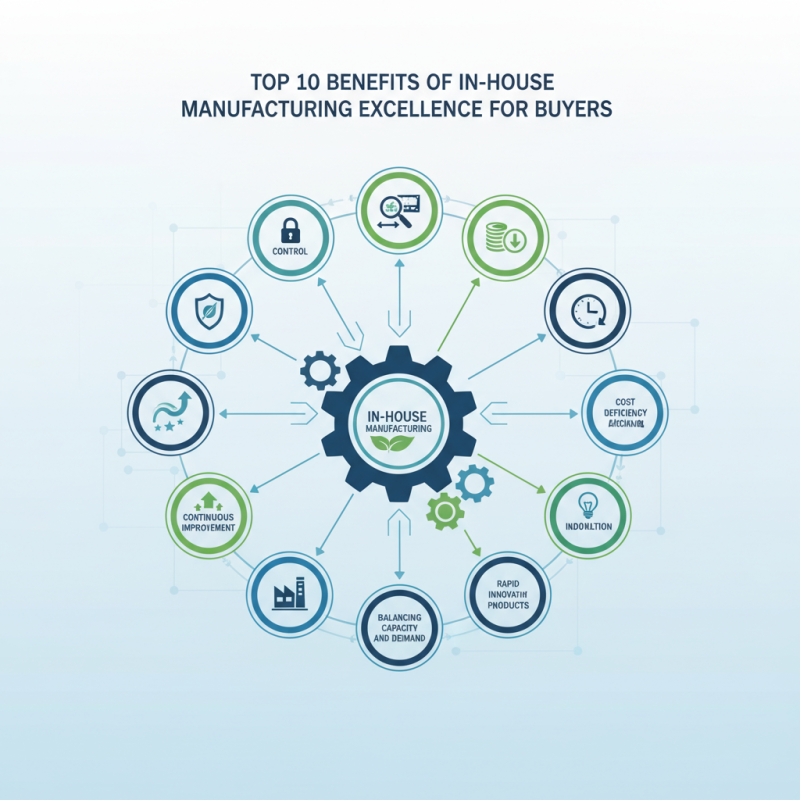
In-house manufacturing excellence represents a pivotal strategy for modern buyers. This approach emphasizes control, enhanced quality, and cost efficiency. By streamlining production within their facilities, companies can adapt quickly to market changes. They reduce dependency on external suppliers, minimizing risks linked to global supply chains.

With an eye on quality, in-house manufacturing fosters a culture of continuous improvement. It enables firms to implement rigorous quality checks and refine processes. Buyers benefit directly from this commitment as they receive superior products tailored to their specifications. The ability to innovate rapidly is another boon that comes with in-house capabilities. Companies can test and launch new products faster than ever.

However, achieving true in-house manufacturing excellence is not without challenges. It requires investment in technology and training. Some companies may find it difficult to balance production capacity with demand fluctuations. Reflecting on these challenges is crucial. Buyers must weigh the advantages against potential drawbacks to make informed decisions.
Top 10 Benefits of In-house Manufacturing Excellence for Buyers?

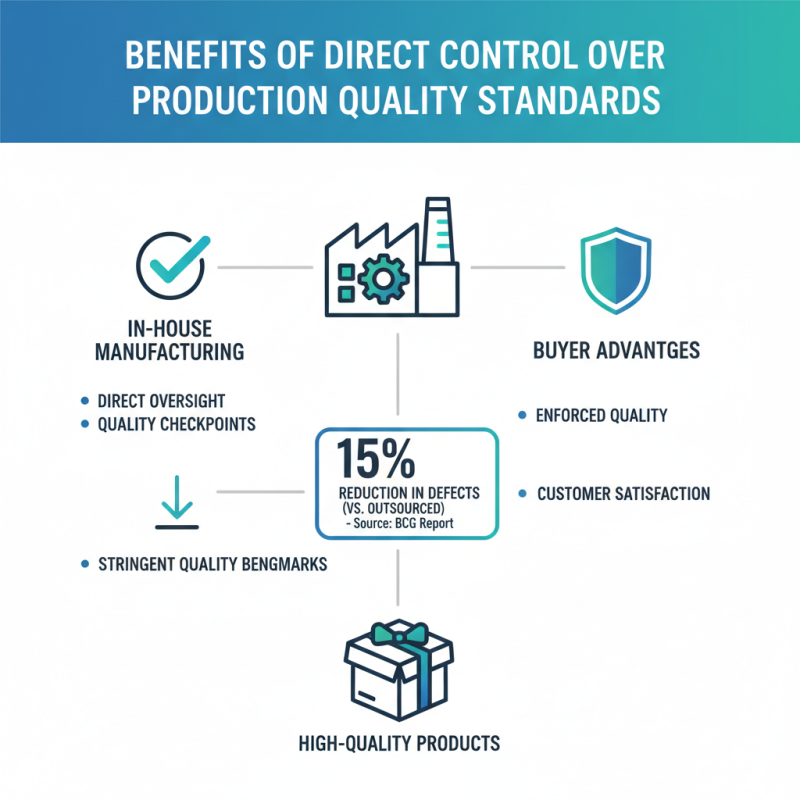
Benefits of Direct Control Over Production Quality Standards
Top 10 Benefits of In-house Manufacturing Excellence for Buyers?

In-house manufacturing offers distinct advantages, particularly in controlling production quality standards. Buyers benefit from direct oversight, allowing them to enforce quality checkpoints throughout the manufacturing process. A report from the Boston Consulting Group highlights that companies with in-house manufacturing see a 15% reduction in defects compared to outsourced operations. This direct control leads to products that meet stringent quality benchmarks, essential for maintaining customer satisfaction.

Moreover, having a dedicated production team fosters a culture of quality. Workers become more engaged with the product, leading to continuous feedback and improvement. A survey by the National Institute of Standards and Technology showed that organizations prioritizing quality in-house experienced a 20% increase in operational efficiency. This efficiency translates into faster problem resolution, minimizing disruptions in the supply chain.

It’s crucial to acknowledge potential challenges in this model. The initial costs of setting up in-house manufacturing can be significant. Not all companies may fully harness the benefits due to limited expertise or investment. Continuous training and development are necessary to maintain high-quality standards. Balancing cost with quality is a constant challenge, urging buyers to reflect on their specific needs and capabilities before making a commitment.
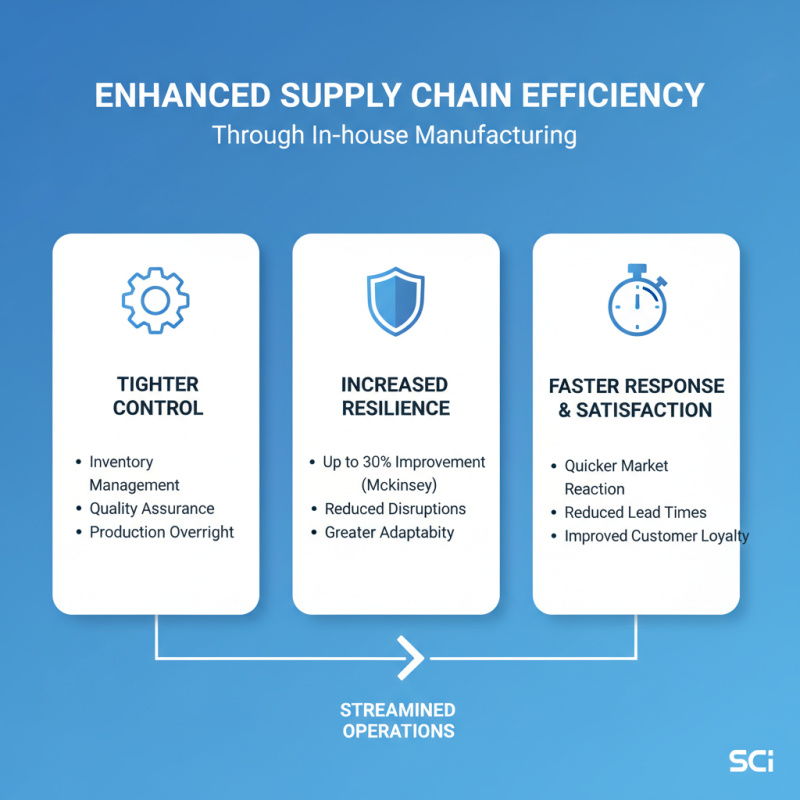
Enhanced Supply Chain Efficiency Through In-house Manufacturing

Top 10 Benefits of In-house Manufacturing Excellence for Buyers?

In-house manufacturing can significantly enhance supply chain efficiency. When companies manage production internally, they gain tighter control over inventory and quality. A recent report by McKinsey highlights that firms adopting in-house manufacturing improve their supply chain resilience by up to 30%. This control leads to quicker response times to market changes, reducing delays and enhancing customer satisfaction.

One key tip for companies is to streamline communication across departmental lines. Establishing a clear dialogue between production and procurement teams ensures that everyone is aligned on supply chain demands. This contributes to better decision-making and optimization of resources.

Another insight is to focus on staff training. Investing in employee skills directly impacts production efficiency. According to a study by Deloitte, organizations that prioritize workforce development see a 14% increase in productivity. However, not all companies are ready to adopt this culture, sometimes overlooking the long-term benefits in favor of short-term goals. So, reflecting on your current strategy is essential for realizing these potential gains.

Cost Savings and Improved Profit Margins from Local Production

In-house manufacturing offers notable cost savings for buyers, enhancing profit margins through local production. A recent report from the National Association of Manufacturers indicates that companies embracing local manufacturing can reduce labor costs by approximately 20%. By leveraging local resources, businesses can avoid the expenses associated with overseas shipping and tariffs. This direct access to materials helps streamline operations and minimize delays.

Additionally, studies reveal that local production fosters innovation. Companies report a 15% increase in new product introductions when manufacturing is kept in-house. Close proximity to design teams allows for quicker iterations and adjustments. However, maintaining high standards can be challenging. Some firms struggle with quality control in fast-paced environments. Understanding these dynamics is crucial.

Investing in in-house capabilities may seem costly upfront. Yet, the potential for improved profit margins makes it worthwhile. A survey by Deloitte found that 60% of manufacturers that shifted to local production reported higher profit margins within two years. The connection between cost savings and efficiency boosts underscores the importance of strategic planning. Without a careful approach, potential savings may remain unrealized.

Top 10 Benefits of In-house Manufacturing Excellence for Buyers

Fostering Innovation and Flexibility in Product Development

In-house manufacturing excellence fosters innovation and flexibility in product development. When teams operate within the same facility, communication improves. This leads to quicker decision-making, allowing for rapid prototyping and immediate feedback. Such agility is critical in today’s fast-paced market.

Fostering a culture of collaboration enhances creativity. Engineers and designers can work side by side, sparking fresh ideas. As challenges arise, teams can brainstorm solutions in real-time. However, this setup isn't without issues. Conflicting priorities may cause tension. Balancing speed and quality can also be tricky.

Flexibility in product development is essential. Companies can adapt their offerings based on market demands. Testing new concepts quickly often leads to unique products. Yet, relying solely on internal resources might stifle diversity in ideas. External input can sometimes help. Emphasizing innovation while managing these dynamics is a continual process. It requires regular reflection on team practices.

Strengthening Customer Relationships with Customized Solutions

In-house manufacturing excellence can transform buyer relationships through tailored solutions. With the right capabilities, manufacturers create products that meet specific customer needs. For instance, a report from McKinsey highlights that 70% of companies that adopt custom solutions see significant increases in customer satisfaction. This statistic underscores the necessity for manufacturers to enhance their processes for better alignment with client expectations.

Customization enhances the buyer's experience. Research conducted by Deloitte reveals that 72% of consumers express a preference for personalized interactions. This preference drives companies to invest in manufacturing that allows for quicker adjustments in production. However, the transition to in-house manufacturing comes with challenges. Firms often struggle with supply chain errors or delays during initial setup phases, leading to reduced efficiency. Proper training and robust systems can mitigate these risks, ensuring that manufacturers can deliver consistently.

According to industry analyses, businesses that implement in-house manufacturing report up to a 30% reduction in lead times. This benefit can significantly impact customer loyalty. Yet, the process isn't without flaws, and firms must remain agile. Balancing customer demands with manufacturing capabilities requires continuous evaluation and adaptation. Addressing these complexities reveals opportunities for improvement throughout the manufacturing journey.

Top 10 Benefits of In-house Manufacturing Excellence for Buyers

Benefit Description Impact on Relationship
Customization Ability to tailor products to meet specific customer needs. Enhances buyer satisfaction and loyalty.
Quality Control Higher standards of quality assurance and faster issue resolution. Builds trust in product reliability.
Speed to Market Reduced lead times for product availability. Strengthens customer satisfaction through timely deliveries.
Cost Efficiency Lower production costs leading to competitive pricing. Increases customer retention through cost savings.
Innovation Encourages continuous improvement and new product development. Keeps buyers engaged and excited about offerings.
Supplier Independence Reduces reliance on third-party suppliers. Enhances control over the supply chain and reliability.
Sustainability Focus on environmentally friendly practices. Attracts environmentally conscious customers.
Transparency Open communication regarding production processes. Builds stronger relationships through trust.
Customer Feedback Incorporating buyer insights into product development. Fosters a sense of partnership and loyalty.
Scalability Ability to quickly scale production as demand changes. Keeps buyers satisfied during peak demands.
Zer0 Product Recalls

Why Shalby MedTech

We are committed to deliver solutions and transforming the way joint replacement procedures are performed.

Reliability
Integrity
Teamwork